Faith and history
The accounts below are devotional traditions cherished in Vaishnava communities and Braj folklore. They are matters of faith rather than independently verified history, and regional versions differ.
Bhadrapada Shukla Ashtami · Shri Radha Rani · Braj
The traditional appearance day of Shri Radha Rani, revered in Vaishnava devotion as the embodiment of selfless love and bhakti. Devotees in Barsana, Vrindavan and homes everywhere celebrate with midday puja, flowers, bhog, bhajan and kirtan.
Next Radha Ashtami · Panchang data unavailable—please verify with your local Panchang. · Bhadrapada Shukla Ashtami · New Delhi, India
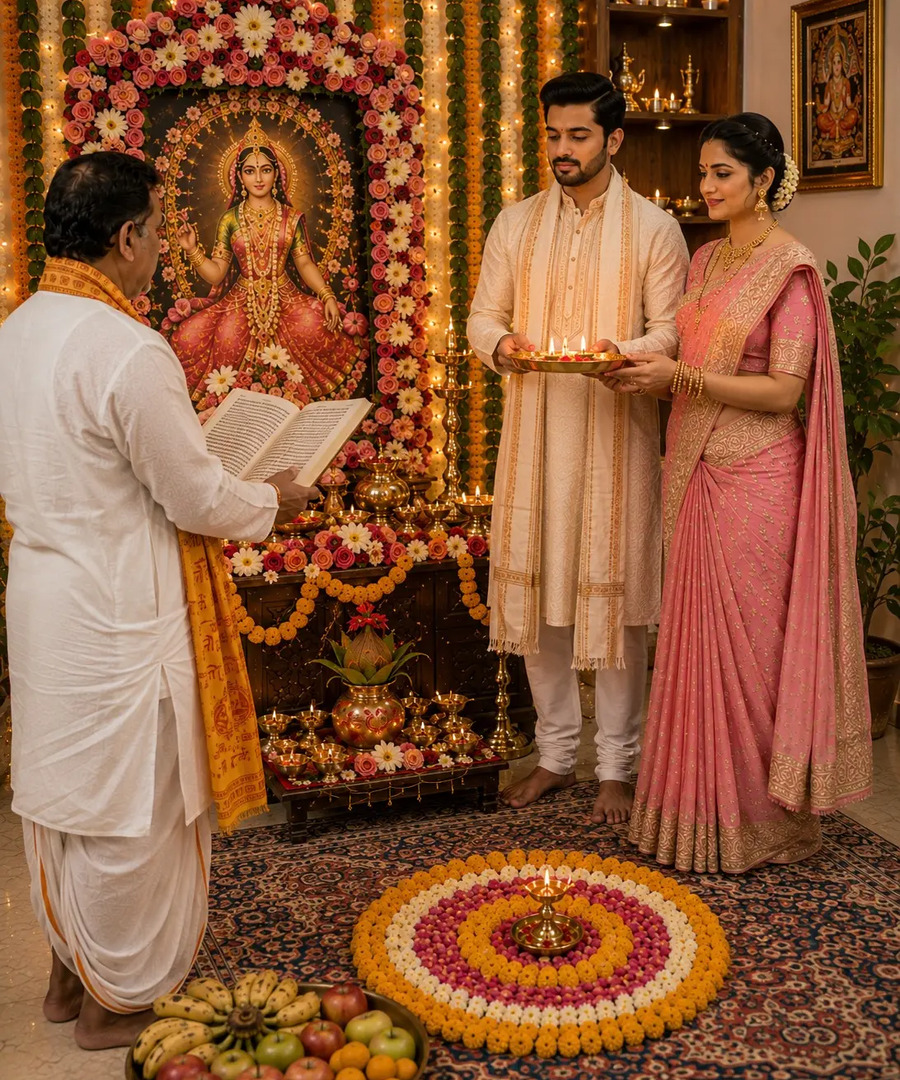
Image placeholder — to be replaced
Shri Radha Rani in a traditional devotional setting inspired by Barsana — verified image awaiting upload
01 / 05
Shri Radha Rani of Barsana
बरसाना की श्री राधा रानी
Fasting is a personal choice, not a medical requirement. Kirtan, prayer and seva are complete devotion. Pregnant people, children, older adults and anyone with a medical condition should prioritise health and seek medical advice.
Panchang · New Delhi, India · Asia/Kolkata
Panchang data unavailable—please verify with your local Panchang.
Panchang data unavailable—please verify with your local Panchang.
The shared verified calendar reads the rolling current year plus nine years. No licensed Panchang provider is connected, so missing dates, sunrise, sunset, Madhyahna and Parana are never estimated. When Ashtami spans two civil dates, the date follows the convention stated in the verified record's notes. New Delhi is this page's reference location; its timing is not universal, and city selection is not currently available.
Radha Ashtami is kept separate from Krishna Janmashtami and Durga Ashtami. Most Panchangs choose the day on which Ashtami prevails at Madhyahna; Braj temples and Vaishnava Sampradayas may follow their own rules, so dates can differ by a day — the verified record notes state which tradition is followed.
राधा रानी पूजा विधि
Household customs differ from specific temple and Sampradaya rituals. No mantras or compulsory steps are prescribed here; follow your family, temple or guru.
Clean the puja space and prepare a decorated chowki.
Place a Radha Rani or Radha-Krishna murti or image respectfully.
Arrange fresh flowers, garlands, clean cloth and customary puja items.
Offer water, sandalwood, kumkum, akshat and flowers according to family tradition.
Perform abhishek or symbolic bathing only if suitable for the murti and followed in your household.
Dress and adorn the deity respectfully according to tradition.
Offer fruits, sweets, mishri and other suitable bhog.
Recite Radha Rani’s names from a trusted source, read the Radha Ashtami katha, or join bhajan and kirtan.
Perform aarti — traditionally around the midday (Madhyahna) period — and offer the prepared prasad.
Those who fast usually complete it after the midday puja or as their tradition directs; follow the Parana time shown above only when verified for your city, or your temple or family elders.
पूजा सामग्री सूची
Tick items as you prepare; progress is saved on this device. Optional and regional items are marked.
0 of 18 items prepared18 में से 0 सामग्री तैयार
Items depend on family, region and the chosen puja; optional items are not universal requirements. · सामग्री परिवार, क्षेत्र और चुनी हुई पूजा अनुसार बदलती है।
व्रत, भोग और प्रसाद
Some devotees fast until the midday puja, others keep a phalahar (fruit and milk) fast for the day, and many observe without fasting. Practices differ between households and Vaishnava traditions.
Seasonal fruits, milk, curd, makhana and simple sattvik preparations are common fasting choices.
Mishri, makhan-mishri, kheer, malpua, laddoo, fruits and household specialities. Offer what your family traditionally prepares, made hygienically.
Fasting is a personal religious practice, not a medical requirement. Strict or waterless fasting is not expected of everyone.
Kirtan, chanting Radha Rani’s names, reading the katha, offering seva or helping others are complete forms of devotion.
Pregnant people, children, older adults and anyone with medical conditions or medicines affected by food or fluids should prioritise health and seek appropriate medical advice. Do not ignore dizziness, weakness or dehydration.
आध्यात्मिक महत्व और ब्रज परंपराएँ
Radha Rani is revered as the embodiment of devotion offered without expectation.
Devotees remember her gentleness and humility as qualities to cultivate.
Loving service — to the divine and to others — is central to the devotion she represents.
These Braj towns hold deep devotional importance. Temple ceremonies, darshan timings and access arrangements vary and can change; verify local temple schedules before visiting.
Radha Ashtami falls fifteen days after Krishna Janmashtami. Radha Ashtami worship is associated with midday (Madhyahna), whereas Janmashtami is traditionally associated with midnight (Nishita) — their timings are separate.
बारह राशियों के लिए चिंतन
Traditional spiritual reflection, not a scientific or guaranteed prediction. No marriage, relationship, health, wealth, career or future outcome is promised.
सम्मानपूर्ण उत्सव और सावधानियाँ
Keep diyas on heat-resistant surfaces away from flowers, cloth and curtains; never leave flames unattended. Ventilate rooms with incense.
Prepare bhog hygienically, keep prasad covered and refrigerate perishable sweets.
Follow temple rules on dress, photography and offerings, and wait patiently for darshan.
Major celebrations in Barsana and Vrindavan can be very crowded. Follow police and temple guidance, keep children and elders close, carry water, and avoid pushing in queues.
No one should be pressured to fast or perform rituals they cannot safely undertake. Missing a ritual does not cause misfortune; sincere devotion in any form is respected.
Radha Rani narratives are devotional traditions; birthplace accounts differ. No dates, mantras, quotations or images were invented for this page; the existing artwork is illustrative.