Bhadrapada Purnima → Sarva Pitru Amavasya · Shraddha · Tarpan · Pind Daan

Pitru Paksha Shraddha / पितृ पक्ष श्राद्ध

Pitru Paksha — the “fortnight of the ancestors” — is a period in the Hindu lunar calendar when families remember and honour their departed elders through Shraddha, Tarpan, Pind Daan, prayer, food offerings and charity. It is an observance period, not a single-day festival: each family usually performs Shraddha on the lunar tithi that corresponds to an ancestor’s passing, according to its own tradition.

Panchang data unavailable—please verify with your local Panchang. · New Delhi, India

Dates and ritual rules vary by region, lunar calendar convention (Purnimanta/Amanta) and family tradition.

Image placeholder — to be replaced

A diya and flowers in a calm, respectful remembrance setting — verified image awaiting upload

01 / 05

Ancestral remembrance

पितृ स्मरण

An observance period, not a single day. Each family usually performs Shraddha on the tithi that matches an ancestor’s passing; not every family performs it on Amavasya. Remembrance is an act of love — nobody should feel fear or guilt.

Puranik Katha & History

A traditional narrative, not a historical record

The story below is a popular devotional account associated with the Mahabharata tradition. It is told to explain the meaning of Pitru Paksha and is presented here as religious narrative, not as a verified historical event. Retellings differ between regions and texts.

Karna’s experience after death

According to the widely told account, when the warrior Karna died and reached the heavenly realm, he was offered gold and jewels instead of food. When he asked why, he was told that during his life he had donated generously in gold but had never offered food in remembrance of his ancestors. Karna explained he had not known who his ancestors were. He was permitted to return to earth for a fortnight, during which he offered food and water in their memory. Tradition associates that fortnight with Pitru Paksha.

What the story teaches

The narrative emphasises that remembering one’s forebears, feeding others and acts of gratitude carry meaning that material wealth alone does not. It is commonly read as encouragement towards humility, charity and family remembrance rather than as a literal description of the afterlife.

The meaning of Pitru Paksha

In the Purnimanta calendar (common in North India) the period falls in the Krishna Paksha of Ashwin; in the Amanta calendar (common in South and West India) the same lunar fortnight is called Bhadrapada Krishna Paksha. The dates are identical — only the month name differs. It generally begins after Bhadrapada Purnima and concludes on Sarva Pitru (Mahalaya) Amavasya.

Shraddha, Tarpan and Pind Daan

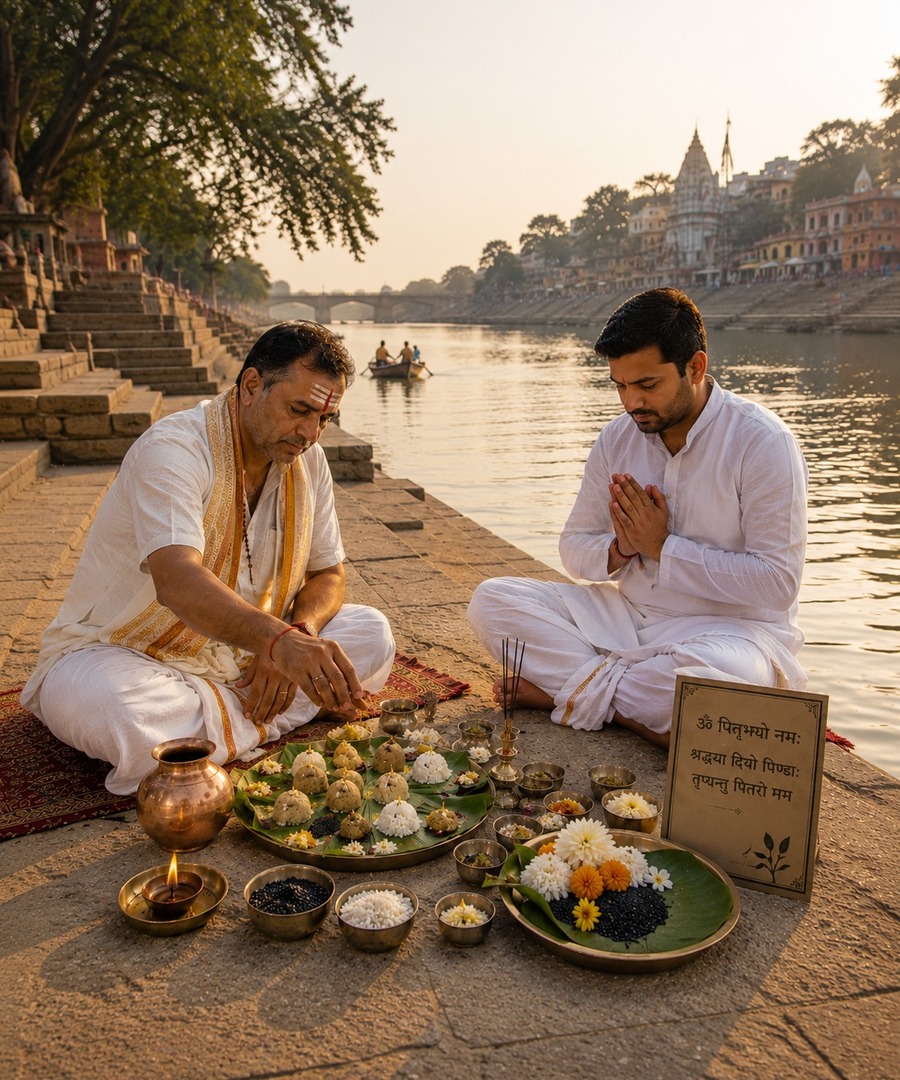
Shraddha (from shraddha, “faith”) refers broadly to rites performed with devotion for departed ancestors. Tarpan is the offering of water — often with sesame seeds and darbha grass — in their memory. Pind Daan is the offering of pindas, rice or grain balls, traditionally performed by the family with a priest’s guidance. Which of these a family performs, and how, depends on its tradition.

Remembrance, gratitude and charity

Across communities the period is linked with gratitude towards those who came before, feeding Brahmins, guests, people in need or animals according to custom, and keeping family memory alive. Many families also refrain from starting new ventures during this fortnight; this is a traditional custom, not a universal obligation.

The period versus the individual tithi

The fortnight as a whole is Pitru Paksha. An individual’s Shraddha is usually performed on the single tithi within it that matches the lunar tithi of the ancestor’s death. Those who passed on Purnima are traditionally remembered on Purnima Shraddha, and Sarva Pitru Amavasya is traditionally observed for all ancestors, including those whose tithi is unknown.

Pitru Paksha Dates, Tithis & Shraddha Muhurat

Panchang · New Delhi, India · Asia/Kolkata

Panchang data unavailable—please verify with your local Panchang.

Pitru Paksha begins
Not verified
Pitru Paksha ends
Not verified
Verified starting tithi
Not verified
Tithi begins
Not verified
Tithi ends
Not verified
Purnima Shraddha
Not verified
Sarva Pitru (Mahalaya) Amavasya
Not verified
Kutup Muhurat
Not verified
Rohina Muhurat
Not verified
Aparahna Kaal
Not verified
Local sunrise
Not verified
Local sunset
Not verified
Tradition & notes
Not verified

Shraddha tithis in this Pitru Paksha

No verified per-tithi timings available.

Panchang data unavailable—please verify with your local Panchang. No verified upcoming occurrence is available. Automatic Panchang synchronization is not connected; consult your local Panchang.

The shared verified calendar reads the rolling current year plus nine years. No licensed Panchang provider is connected, so missing dates, tithi boundaries, Kutup, Rohina, Aparahna, sunrise and sunset are never estimated. New Delhi is the reference location; city selection is not currently available.

Choosing your Shraddha day

Find the death tithi

Shraddha follows the lunar tithi of the ancestor’s passing — not the Gregorian date. If your family records the tithi (for example Krishna Panchami), perform Shraddha on that tithi within Pitru Paksha.

Purnima Shraddha

For ancestors who passed on a Purnima, many traditions perform Shraddha on Bhadrapada Purnima, at the start of the period.

Sarva Pitru Amavasya

The concluding Amavasya is traditionally observed for all ancestors, and especially when the exact tithi is unknown or the tithi day was missed.

When a tithi spans two days

Panchangs generally assign Shraddha to the day on which the tithi prevails during Aparahna (afternoon). This is why a local Panchang for your city matters — the date can shift by a day between locations.

Regional and family exceptions

Some traditions keep special days (for example particular tithis for specific relationships or circumstances). These vary; follow your family custom or consult a knowledgeable priest rather than relying on a general rule.
Shraddha Vidhi

श्राद्ध विधि

Common household practices are listed. Priest-led rites and regional procedures differ; no mantras or compulsory steps are prescribed here — follow your family tradition or a knowledgeable priest.

  1. 1

    Identify the Shraddha tithi

    Use your family’s records and a reliable local Panchang to find the tithi that applies to your ancestor within Pitru Paksha.

  2. 2

    Prepare a clean, respectful space

    Clean the area where the rite will be performed. Many families use a simple cloth, a quiet corner and minimal decoration.

  3. 3

    Gather materials

    Arrange the items customary in your family — see the checklist below. Not every household uses every item.

  4. 4

    Personal preparation and sankalp

    Bathe, wear clean clothes and, if your custom includes it, make a sankalp (statement of intent) naming the ancestor. The words used vary; follow your family or priest.

  5. 5

    Tarpan — offering water

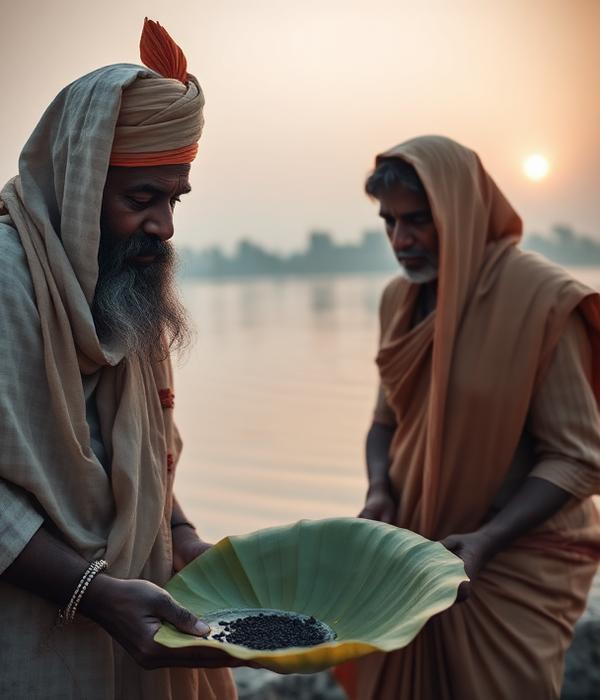
    Water, often mixed with black sesame, is offered respectfully in memory of the ancestors. The hand position, direction faced and sequence differ by tradition; a priest can guide you.

  6. 6

    Pind Daan where customary

    In families that perform it, pindas of cooked rice or other grain are prepared and offered. This is usually priest-led, and some households do not perform it at home.

  7. 7

    Role of darbha, sesame, water and rice

    These materials appear in many Shraddha practices as traditional symbols of purity and offering. Use them only as your tradition prescribes.

  8. 8

    Food offerings and feeding others

    A simple sattvic meal is often prepared and offered first, then served to invited Brahmins, guests, relatives or people in need according to family custom. Portions are commonly set aside for crows, cows or dogs in many regions.

  9. 9

    Charity

    Many families give food, clothing or other help in memory of the ancestor. Choose what is meaningful and within your means.

  10. 10

    Concluding prayers

    Close with prayer or a moment of silent remembrance, then tidy the space and handle offerings respectfully.

Interactive Shraddha Samagri Checklist

श्राद्ध सामग्री सूची

Tick items as you prepare; progress is saved on this device. Not every household needs every item — labels show which are optional, priest-specific or regional.

0 of 14 items prepared14 में से 0 सामग्री तैयार

Items depend on family, region and the chosen puja; optional items are not universal requirements. · सामग्री परिवार, क्षेत्र और चुनी हुई पूजा अनुसार बदलती है।

Traditional Food, Offerings & Charity

भोजन, अर्पण और दान

Common food-offering practices

Households often prepare simple sattvic food — kheer, rice, dal, seasonal vegetables and puris are widely mentioned — but menus vary by region. Many families avoid onion and garlic for the meal; this is a customary practice, not universal.

Feeding guests and people in need

Tradition sees feeding others as an act of remembrance and gratitude. It is described as meaningful service, not as a transaction that guarantees any particular outcome.

Food hygiene

Cook in a clean kitchen, keep cooked food covered, avoid leaving perishable offerings out in heat for long, and serve guests promptly. Respect allergies and dietary needs of those you feed.

When elaborate rites are not possible

Lighting a lamp, a quiet prayer, sharing a meal in a loved one’s memory, helping a vulnerable person or donating to a cause they cared about are respectful ways to remember. Many families value these sincerely; some traditions still regard specific rites as distinct, so consult your family or priest if that matters to you.

Guidance

मार्गदर्शन

Identifying the applicable tithi

Check family records, ask elders, or look up the tithi corresponding to the date of death in a Panchang for the place where your family follows its calendar.

Why local Panchang matters

Tithi start and end times depend on location. Aparahna, Kutup and Rohina are calculated from local sunrise and sunset, so a city-specific Panchang avoids picking the wrong day.

Regional and family differences

Purnimanta and Amanta calendars name the month differently; communities also differ in rituals, food and who performs the rites. No single procedure is universal.

When to consult a priest

Pind Daan, Tarpan with mantras, rites for specific circumstances, and questions about who should perform the Shraddha are best discussed with a knowledgeable priest or your family’s established tradition.

If the death tithi is unknown

Traditionally, Shraddha for ancestors whose tithi is unknown is performed on Sarva Pitru Amavasya, the last day of the fortnight.

Remembrance without elaborate rites

Prayer, gratitude, sharing family stories and service to others are sincere ways to honour ancestors when resources, health or circumstances do not allow a full ritual.

Grief, guilt and fear

Remembrance is an act of love. You do not need to feel fear or guilt about doing what you can. Claims that ancestors will curse or harm a family are not part of the respectful guidance on this page.

12 Rashi Guidance & Puja Impact

बारह राशि मार्गदर्शन

Traditional spiritual or astrological reflection, not scientific prediction. A Rashi does not indicate ancestral displeasure, curses or any future outcome.

Mesh (Aries)

Spiritual reflection
Energy offered with patience becomes a gift to the family line.
Practical suggestion
Plan the Shraddha preparations calmly a day in advance.
Reflective practice
Practise a few minutes of quiet remembrance before acting.
Positive action
Help an elder relative with a practical task this week.

Vrishabh (Taurus)

Spiritual reflection
Steadiness and nourishment are traditional ways of honouring forebears.
Practical suggestion
Cook or help cook a simple meal offered in remembrance.
Reflective practice
Reflect on what your family taught you about food and sharing.
Positive action
Share a meal with someone who eats alone.

Mithun (Gemini)

Spiritual reflection
Words carry memory forward between generations.
Practical suggestion
Ask elders about family names, places and tithis.
Reflective practice
Write down one family story you have never recorded.
Positive action
Create a simple family tree to share with relatives.

Kark (Cancer)

Spiritual reflection
Home and care are where remembrance begins.
Practical suggestion
Keep the ritual space at home clean and peaceful.
Reflective practice
Offer a lamp while recalling loved ones by name.
Positive action
Call a relative who may be feeling grief this season.

Singh (Leo)

Spiritual reflection
True dignity lies in honouring those who came before.
Practical suggestion
Take responsibility for one part of the observance willingly.
Reflective practice
Reflect on humility, as in the story of Karna.
Positive action
Sponsor a meal for people in need, quietly.

Kanya (Virgo)

Spiritual reflection
Careful service is itself a form of devotion.
Practical suggestion
Prepare the samagri list and check it thoughtfully.
Reflective practice
Practise mindful, hygienic food preparation as an offering.
Positive action
Volunteer an hour at a community kitchen.

Tula (Libra)

Spiritual reflection
Balance and fairness keep families united.
Practical suggestion
Respect differing customs among relatives without argument.
Reflective practice
Contemplate gratitude for both sides of your family.
Positive action
Help resolve a small family misunderstanding gently.

Vrishchik (Scorpio)

Spiritual reflection
Deep feeling can turn into healing remembrance.
Practical suggestion
Allow time for private prayer or silence.
Reflective practice
Acknowledge grief honestly and without fear.
Positive action
Support someone recently bereaved with your presence.

Dhanu (Sagittarius)

Spiritual reflection
Wisdom inherited is meant to be passed on.
Practical suggestion
Learn the meaning of one ritual before performing it.
Reflective practice
Read a short reflection on dharma and gratitude.
Positive action
Teach a younger family member why the day is observed.

Makar (Capricorn)

Spiritual reflection
Duty fulfilled with sincerity honours the lineage.
Practical suggestion
Keep the observance simple and within your means.
Reflective practice
Reflect on the responsibilities your elders carried.
Positive action
Donate essentials to an elder-care home.

Kumbh (Aquarius)

Spiritual reflection
Service to society can extend family remembrance.
Practical suggestion
Choose a charitable act linked to a value your ancestor held.
Reflective practice
Meditate on interdependence across generations.
Positive action
Support an education or water project in their memory.

Meen (Pisces)

Spiritual reflection
Compassion is a quiet offering that needs no display.
Practical suggestion
Offer water and flowers with a gentle, devotional mind.
Reflective practice
Practise a short prayer of thanks before meals this fortnight.
Positive action
Feed birds or animals responsibly as your custom allows.

Do's, Don'ts & Respectful Observance

क्या करें, क्या न करें

Handle offerings respectfully

Keep offerings clean and covered; do not step over or discard them carelessly.

Food hygiene and leftovers

Refrigerate or distribute leftovers promptly. Many families give remaining food to people or animals; dispose of spoiled food hygienically.

Lamps, incense and flames

Keep diyas and incense away from cloth, curtains and children; never leave flames unattended; ensure ventilation.

Water and natural materials

Use only as much water as needed. Avoid putting plastic, foil or synthetic items into rivers or ponds; compost flowers and leaves where possible. Be careful near water bodies and avoid unsafe ghats.

Respect family differences

Relatives may follow different customs. Discuss calmly rather than insisting one way is the only correct one.

Avoid coercion and fear

Nobody should be pressured, shamed or frightened into rituals or payments. Be wary of anyone claiming that skipping a rite will bring curses or misfortune.

Customs vs. science

Practices such as avoiding certain foods, haircuts or new purchases during the fortnight are traditional customs in some communities. They are matters of faith, not medical or scientific facts. Anyone with health needs should eat appropriately.

Frequently Asked Questions About Pitru Paksha

Related Festivals

Sources & Tradition Notes

The Karna narrative is a traditional devotional account with varying retellings. No dates, mantras, scriptural quotations or timings have been invented on this page.