Ashwin Shukla Pratipada → Navami · Vijayadashami

Sharad Navratri / शारदीय नवरात्रि

Sharad Navratri — शारदीय नवरात्रि — is nine nights of devotion to Maa Durga in the bright fortnight of Ashwin. It begins with Ghatasthapana, honours the nine forms of the Goddess (Navadurga), reaches Maha Ashtami and Maha Navami, often includes Kanya Puja, and is followed by Vijayadashami. Observances differ across regions, communities and families.

Panchang data unavailable—please verify with your local Panchang. · New Delhi, India
  • Ghatasthapana
  • Navadurga worship
  • Maha Ashtami
  • Maha Navami
  • Kanya Puja
  • Vijayadashami
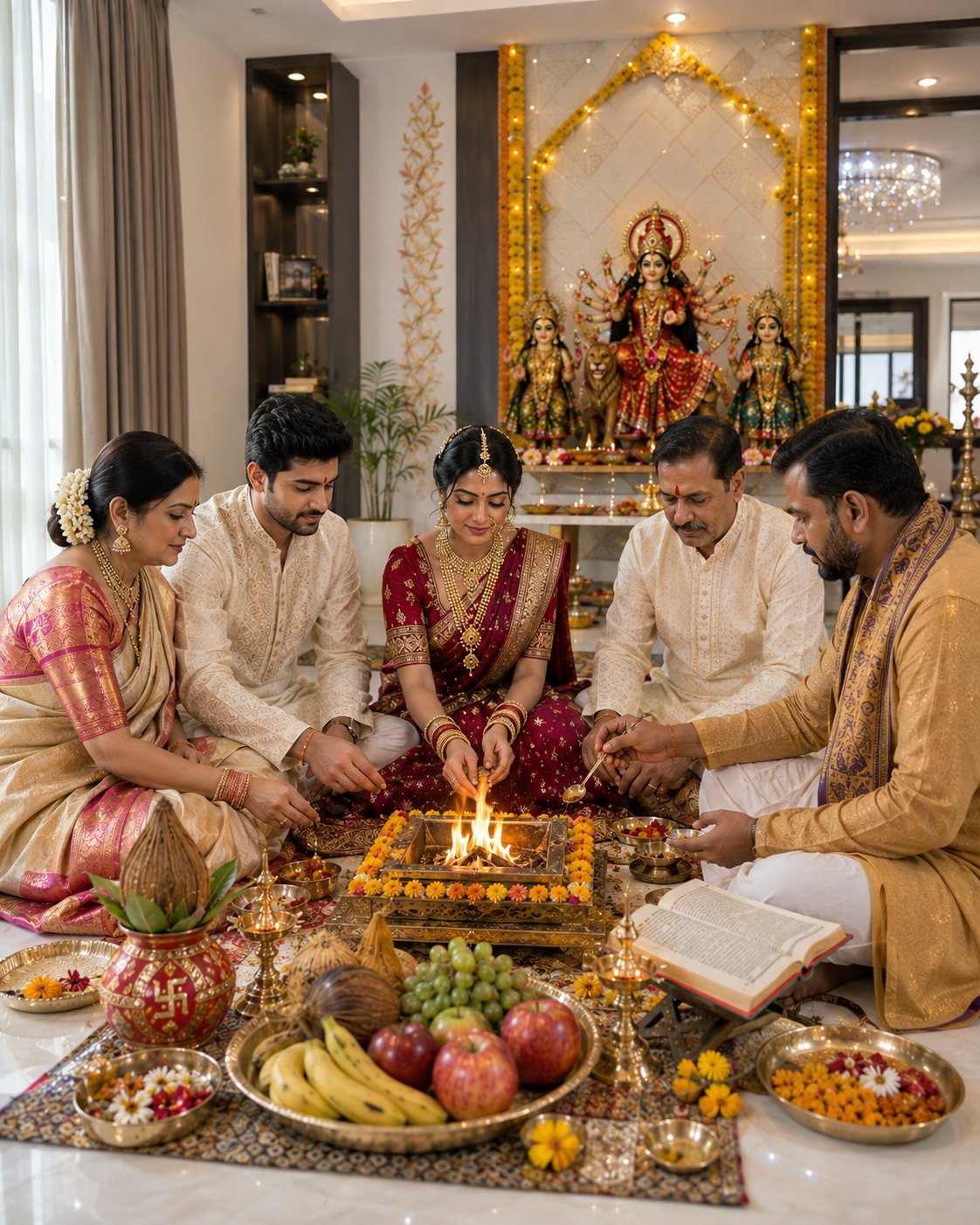
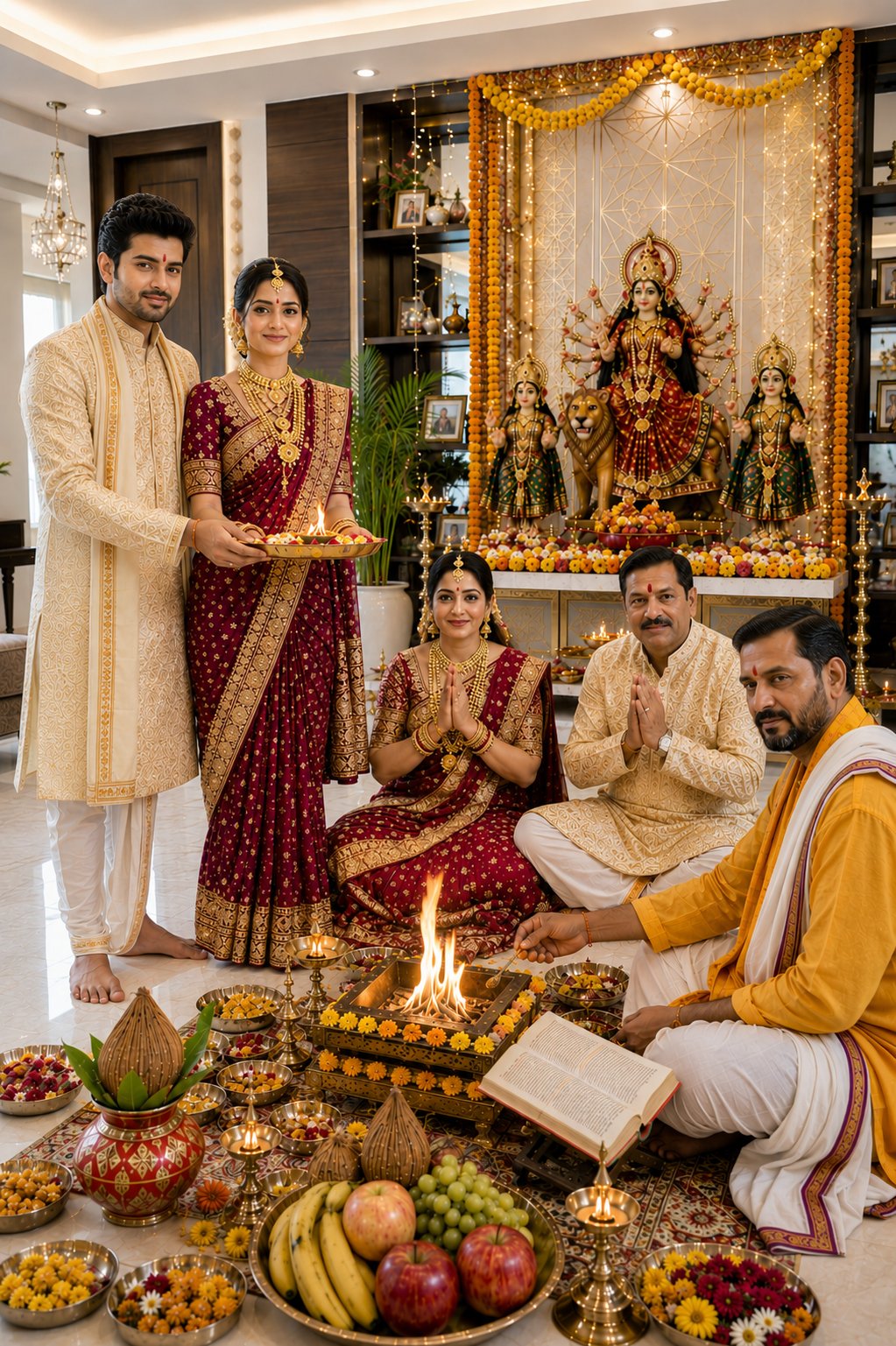
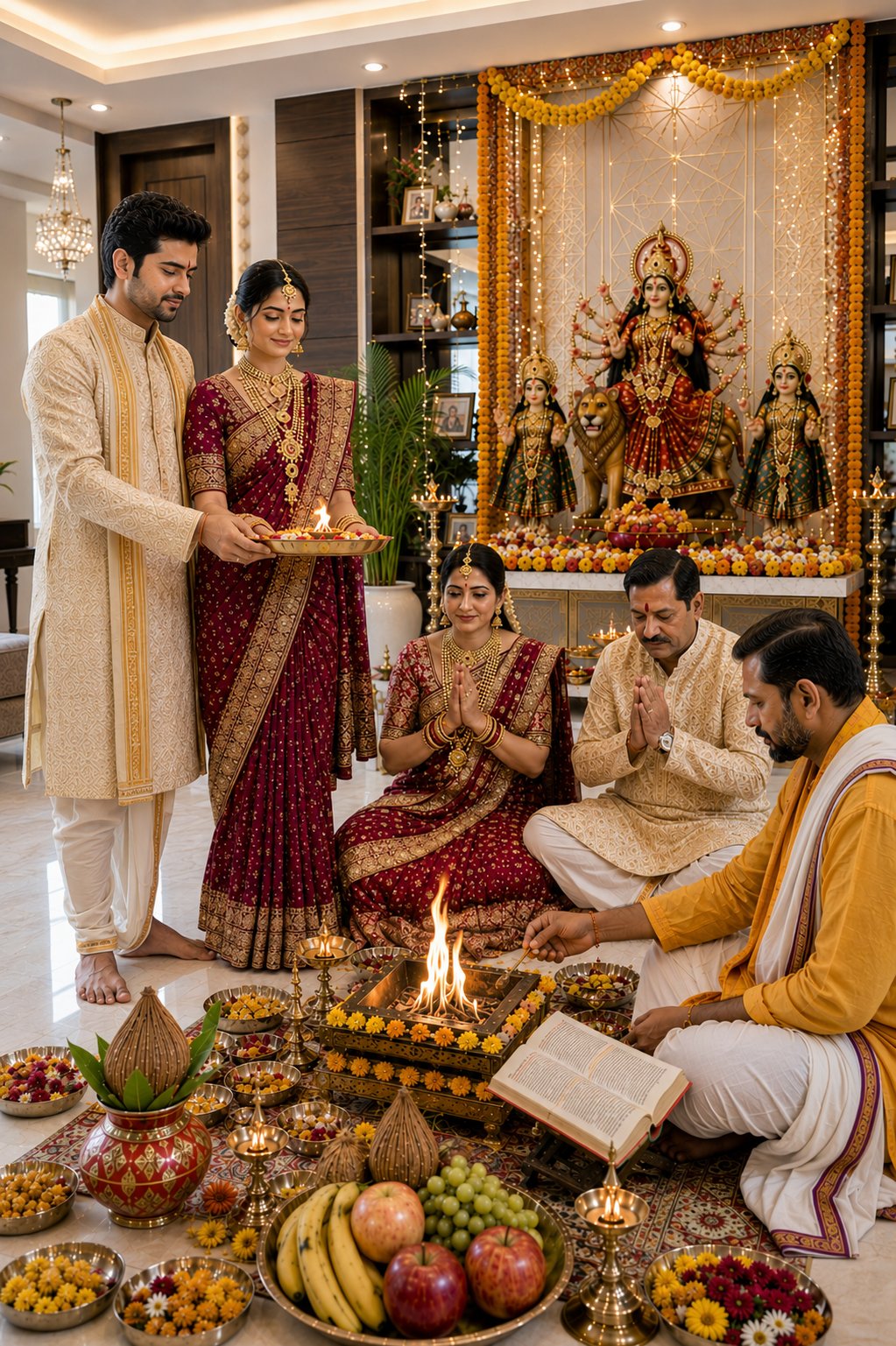
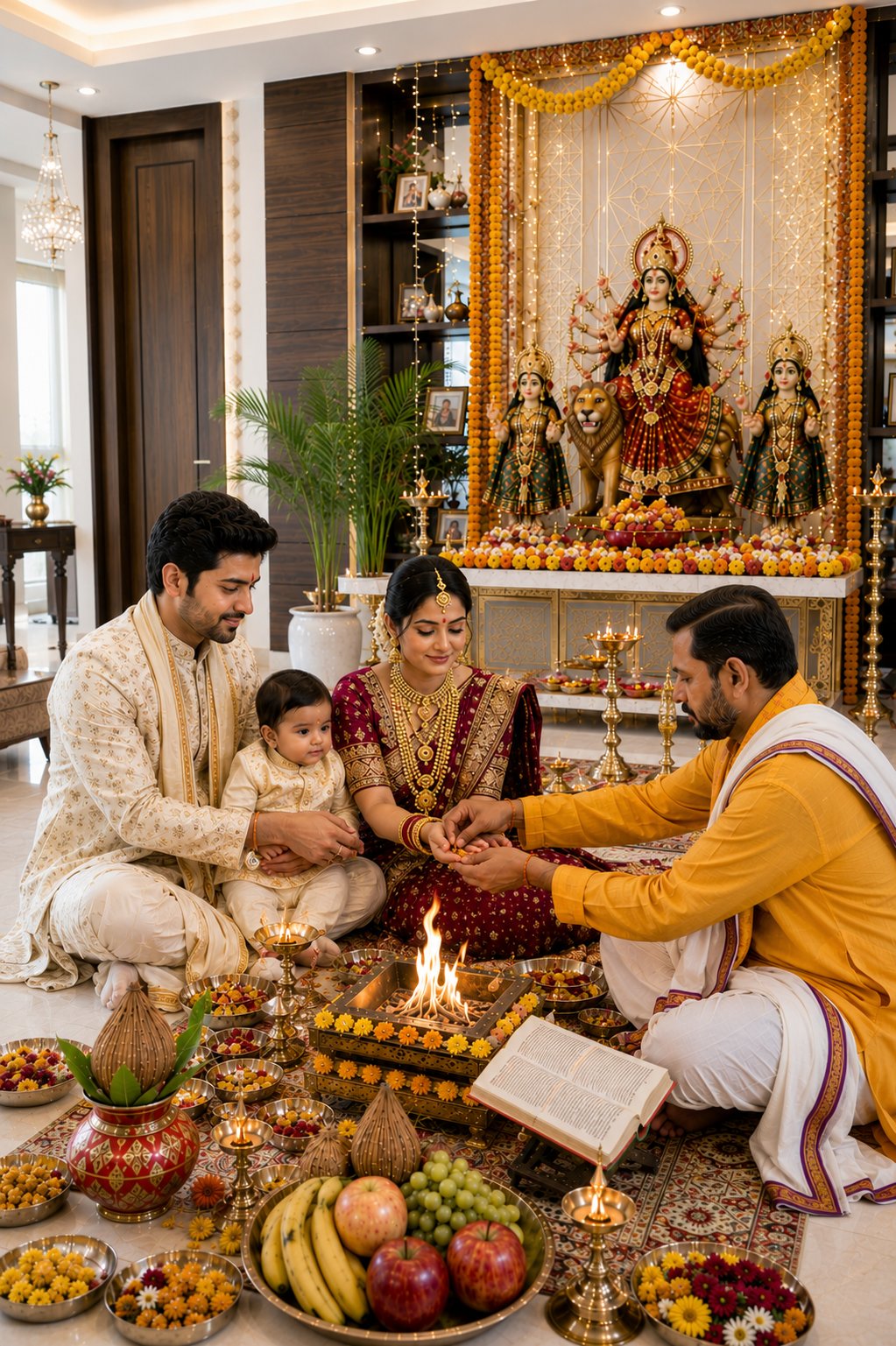
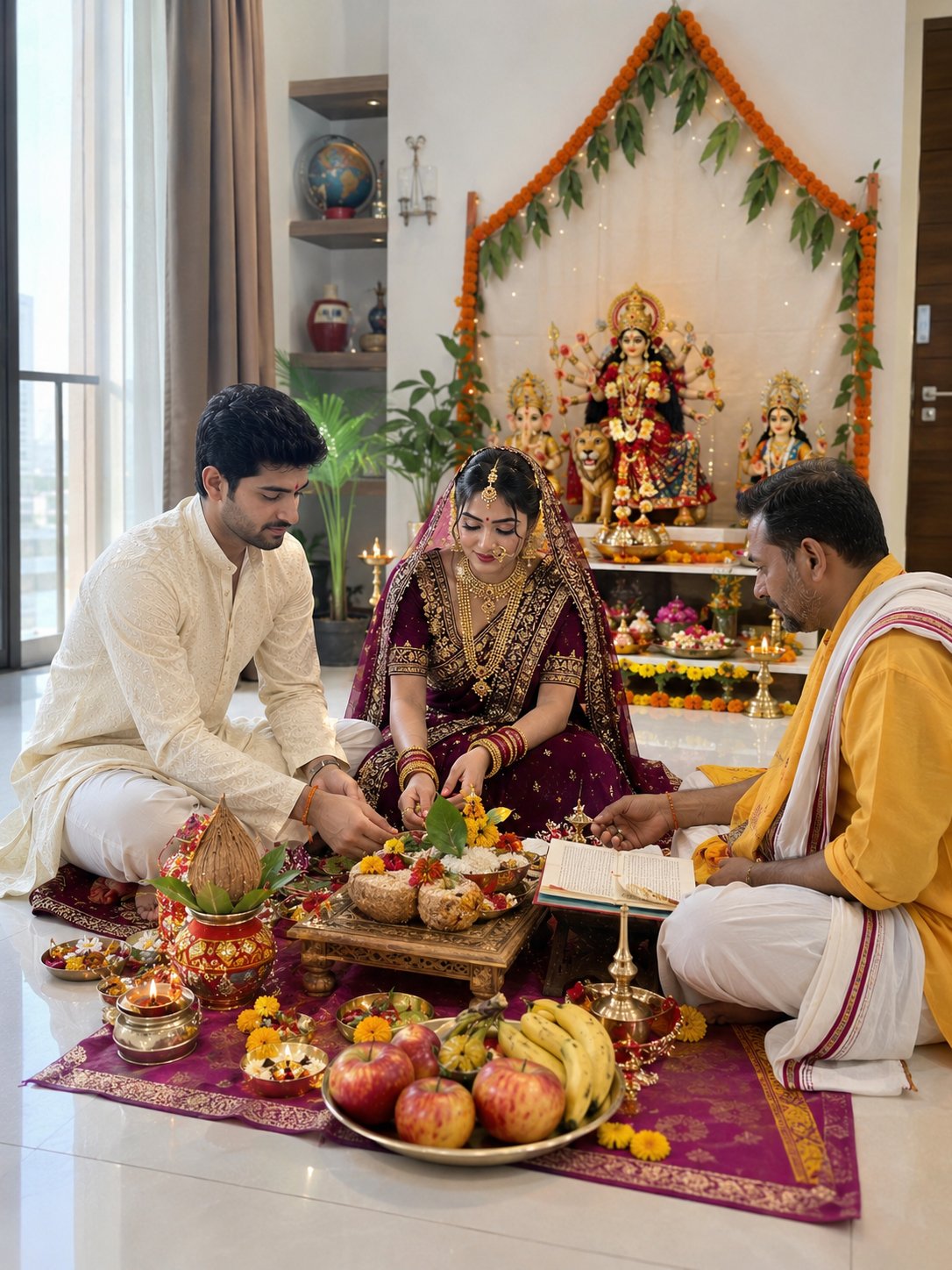
Family and Pandit Ji worshipping before a decorated Maa Durga altar

01 / 05

Maa Durga · The divine mother

Nine nights of devotion to Shakti, courage and compassion.

Observances differ across regions and traditions. Fasting is optional, and no one should feel shamed for observing differently.

Puranik Katha & History

Religious narrative and documented history

The accounts below come from Hindu sacred literature and living tradition. They are devotional narratives rather than documented historical events, and retellings vary by text, region and community.

Maa Durga and Mahishasura

In the Devi Mahatmya (part of the Markandeya Purana), the buffalo-demon Mahishasura overpowers the gods. Their combined radiance manifests as the Goddess, who receives weapons from the deities and, after a fierce battle, defeats him. Navratri is widely understood as a celebration of this victory of dharma over adharma.

The Devi Mahatmya

The text — also known as Durga Saptashati or Chandi Path — narrates three episodes of the Goddess overcoming forces of disorder, including Madhu-Kaitabha, Mahishasura, and Shumbha-Nishumbha. Many households read it, in whole or part, during Navratri.

The nine forms

Navratri is traditionally associated with Navadurga, nine forms of the Goddess worshipped one per day. A widely followed sequence is Shailaputri to Siddhidatri, though some regions and Sampradayas honour different forms or orders.

Lord Rama and Durga worship

Some North Indian traditions, and later regional Ramayana retellings such as the Bengali Krittivasi Ramayana, connect the season with Lord Rama worshipping the Goddess before his battle with Ravana — an account often called Akal Bodhan. Vijayadashami then marks Rama’s victory in these traditions.

Four Navratris in the year

Sharad Navratri (Ashwin) is the most widely celebrated. Chaitra Navratri falls in spring, and two Gupta Navratris (Magha and Ashadha) are observed more privately by some practitioners. Their dates, observances and associated festivals differ.

Sharad Navratri Dates, Tithis & Ghatasthapana Muhurat

Panchang · New Delhi, India · Asia/Kolkata

Panchang data unavailable—please verify with your local Panchang.

Navratri begins (Ghatasthapana day)
Not verified
Navratri ends
Not verified
Pratipada begins
Not verified
Pratipada ends
Not verified
Ghatasthapana muhurat
Not verified
Ghatasthapana Abhijit muhurat
Not verified
Maha Ashtami
Not verified
Sandhi Puja (where observed)
Not verified
Maha Navami
Not verified
Kanya Puja
On Ashtami or Navami, per family custom
Vijayadashami / Dussehra
Not verified
Local sunrise
Not verified
Tradition & notes
Not verified

Panchang data unavailable—please verify with your local Panchang. No verified upcoming occurrence is available. Automatic Panchang synchronization is not connected; consult your local Panchang.

Dates come from the shared verified calendar covering the rolling current year plus nine years. Ashtami, Navami and Vijayadashami are looked up independently, and only Ashwin Shukla records are accepted — never Chaitra or Gupta Navratri. No licensed Panchang provider is connected, so missing tithis, muhurats and sunrise are never estimated. When a tithi is skipped or repeated, Navratri may last eight or ten days; the verified record notes state the convention. New Delhi is the reference location; city selection is not available yet.

Ghatasthapana & Navratri Puja Vidhi

घटस्थापना एवं नवरात्रि पूजा विधि

Common practices are listed; regional and Sampradaya customs differ. No mantras or compulsory steps are prescribed — follow your family or priest.

  1. 1

    Clean and prepare the puja area

    Clean the space and keep it calm and uncluttered for the nine days.

  2. 2

    Arrange the chowki and cloth

    Place a chowki on stable ground and cover it with a clean red or yellow cloth, as your family prefers.

  3. 3

    Prepare the kalash

    Fill the kalash with water and place mango or other customary leaves and a coconut on it, following your household custom.

  4. 4

    Sow barley (where practised)

    Many households sow barley or other seeds in clean soil beside the kalash; others do not. Follow your tradition.

  5. 5

    Ghatasthapana in the applicable muhurat

    Install the kalash on Pratipada during the muhurat stated by your verified local Panchang. Many Panchangs prefer the morning while Pratipada prevails, with Abhijit Muhurat as an alternative; rules differ, so check your Panchang or priest.

  6. 6

    Offerings

    Offer flowers, kumkum, akshat, a diya, incense and suitable bhog.

  7. 7

    Daily Navadurga worship

    Honour the form of the Goddess associated with each day in your tradition, with a lamp and prayer.

  8. 8

    Daily prayer, aarti and reading

    Perform aarti, read from a text your household follows (such as Durga Saptashati or Durga Chalisa) and make simple offerings.

  9. 9

    Maha Ashtami and Maha Navami

    These days carry special worship. In traditions that observe it, Sandhi Puja is performed at the junction of Ashtami and Navami — only at the time given by a verified Panchang.

  10. 10

    Kanya Puja

    Many families honour young girls as forms of the Goddess on Ashtami or Navami, washing their feet respectfully, offering food and small gifts, always with parental consent.

  11. 11

    Conclusion and Vijayadashami

    Conclude with a final aarti; the kalash is respectfully concluded, and sown barley may be distributed or immersed, then Vijayadashami follows according to family custom.

Interactive Puja Samagri Checklist

पूजा सामग्री सूची

Tick items as you prepare; progress is saved on this device. Optional and regional items are marked — not every household needs every item.

0 of 12 items prepared12 में से 0 सामग्री तैयार

Items depend on family, region and the chosen puja; optional items are not universal requirements. · सामग्री परिवार, क्षेत्र और चुनी हुई पूजा अनुसार बदलती है।

Daily Navadurga Worship

नवदुर्गा दैनिक पूजा

A widely followed sequence; some regions and Sampradayas honour different forms or orders. Offerings listed are regional or household customs, not universal rules. Day timings appear only from verified records.

Day 1 · Date not verified

Shailaputri

Significance
Daughter of the mountain; steadiness and new beginnings.
Devotional practice
Begin with a clear sankalp and a simple lamp.
Customary offering
Pure ghee is a customary offering in some traditions.

Day 2 · Date not verified

Brahmacharini

Significance
Austerity, devotion and perseverance.
Devotional practice
Practise a small act of self-discipline.
Customary offering
Sugar or fruit offerings are common in some households.

Day 3 · Date not verified

Chandraghanta

Significance
Courage with serenity.
Devotional practice
Reflect on facing a fear calmly.
Customary offering
Milk-based sweets are offered in some regions.

Day 4 · Date not verified

Kushmanda

Significance
The creative energy associated with the cosmos.
Devotional practice
Offer gratitude for health and nourishment.
Customary offering
Malpua is customary in some traditions.

Day 5 · Date not verified

Skandamata

Significance
Mother of Skanda; compassion and protection.
Devotional practice
Spend time caring for family.
Customary offering
Bananas are offered in some households.

Day 6 · Date not verified

Katyayani

Significance
Strength in defence of dharma.
Devotional practice
Stand up kindly for what is right.
Customary offering
Honey is customary in some regions.

Day 7 · Date not verified

Kalaratri

Significance
The fierce form that removes darkness and fear.
Devotional practice
Release a negative habit through prayer.
Customary offering
Jaggery offerings are common in some traditions.

Day 8 · Date not verified

Mahagauri

Significance
Purity, peace and forgiveness.
Devotional practice
Seek or offer forgiveness.
Customary offering
Coconut is a customary offering in some regions.

Day 9 · Date not verified

Siddhidatri

Significance
Giver of spiritual accomplishment and wisdom.
Devotional practice
Offer thanks for the nine days of devotion.
Customary offering
Til or sesame is offered in some households.

Vrat, Bhog & Prasad

व्रत, भोग और प्रसाद

Ways people fast

Some fast all nine days, some on selected days such as the first and the last, and many follow non-grain or fruit-based meals according to household custom. None of these is compulsory.

Traditional offerings

Fruits, sweets and — especially for Ashtami/Navami and Kanya Puja — halwa, puri and black chana are common in North India; offerings vary by region.

Prasad

Prepare prasad in a clean kitchen, keep it covered and distribute it respectfully and promptly.

Health comes first

Strict fasting is not required. Waterless fasting is not recommended for everyone. Pregnant people, children, older adults and people with medical conditions or medications affected by food or fluids should prioritise health and seek medical advice. A regular meal with prayer, charity or reading is a sincere observance.

Regional Traditions

क्षेत्रीय परंपराएँ

North India

Kalash Sthapana, Navadurga worship, fasting, Kanya Puja on Ashtami or Navami, and Ramlila leading to Dussehra in many towns.

Gujarat

Nightly Garba and Dandiya Raas around a lamp or image of the Goddess (garbo) are central to the celebration.

Bengal and eastern India

Durga Puja centres on the last days — commonly Shashthi to Dashami — with pandals, Sandhi Puja and immersion on Vijayadashami.

Karnataka and Tamil Nadu

Golu or Bommai Kolu displays of dolls on steps, with visits between homes; Mysuru Dasara is a major celebration in Karnataka.

Maharashtra

Household Ghatasthapana with a lamp kept burning (where practised) and worship of the family deity.

Regional variation

Ashtami, Navami, Kanya Puja and Vijayadashami customs — including which day Kanya Puja is held and how the observance concludes — vary across families and regions. No single practice is the only correct one.

Spiritual Significance

आध्यात्मिक महत्व

Devotion and inner strength

Navratri is a time to cultivate devotion, courage and steadiness of mind.

Victory of dharma

The Goddess’s triumph over Mahishasura symbolises the victory of righteousness and the removal of negativity within and around us.

Compassion and respect

Honouring the Goddess is often linked to respecting women and girls and caring for others.

Practical values

Kindness, self-discipline, respect and helping others carry the spirit of Navratri into daily life.

Belief without guarantees

These are devotional meanings. Observance does not guarantee health, wealth, marriage, career success or supernatural results.

Guidance

मार्गदर्शन

Preparing for Ghatasthapana

Clean the space a day ahead, gather samagri and decide where the kalash will stay safely for nine days.

Finding the local Panchang and muhurat

Use a Panchang for your city; Pratipada and the Ghatasthapana window depend on local sunrise and can shift by location.

Planning daily puja

Keep a short, sustainable routine — a lamp, a prayer, a reading — rather than an exhausting schedule.

Choosing a fasting practice

Choose what suits your health, work and family. A partial fast or none at all is fully acceptable.

Following family and regional customs

Ask elders which forms, days and offerings your family follows; respect differences among relatives.

Kanya Puja, respectfully and safely

Invite with parents’ consent, respect allergies and food safety, never pressure a child and keep the gathering comfortable.

Diya and incense safety

Keep lamps on stable, non-flammable bases away from curtains, and never leave flames unattended.

Reducing waste

Compost flowers, avoid plastic decorations and share leftover prasad rather than discarding it.

12 Rashi Guidance & Puja Impact

बारह राशि मार्गदर्शन

Traditional spiritual reflection, not scientific prediction. No health, wealth, marriage or career outcome is promised, and no Rashi is unlucky or inferior.

Mesh (Aries)

Spiritual reflection
Like Shailaputri’s steadiness, let courage begin with a firm foundation.
Devotional practice
Light a lamp on Pratipada and set one clear intention.
Spiritual lesson
Courage grows from patience.
Positive action
Finish a task you have been postponing.

Vrishabh (Taurus)

Spiritual reflection
Devotion is found in steady, simple offerings.
Devotional practice
Offer fresh flowers each morning.
Spiritual lesson
Consistency is a form of faith.
Positive action
Cook a simple meal for someone in your home.

Mithun (Gemini)

Spiritual reflection
Gentle words honour the Mother within others.
Devotional practice
Read a short passage from your household text daily.
Spiritual lesson
Speech can heal or harm.
Positive action
Send a kind message to someone you have hurt.

Kark (Cancer)

Spiritual reflection
Skandamata’s care reminds us to nurture.
Devotional practice
Pray with your family at aarti time.
Spiritual lesson
Care is strength, not weakness.
Positive action
Spend unhurried time with an elder.

Singh (Leo)

Spiritual reflection
The lion is the Goddess’s vehicle — power that serves dharma.
Devotional practice
Offer red flowers with a prayer for humility.
Spiritual lesson
Leadership means protection, not pride.
Positive action
Stand up for someone treated unfairly.

Kanya (Virgo)

Spiritual reflection
Order and purity prepare the heart as well as the altar.
Devotional practice
Keep the puja space neat each day.
Spiritual lesson
Attention is devotion.
Positive action
Declutter one corner and donate usable items.

Tula (Libra)

Spiritual reflection
Balance between fasting and well-being honours the body.
Devotional practice
Choose a fasting practice that suits your health.
Spiritual lesson
Moderation is wisdom.
Positive action
Help resolve a disagreement fairly.

Vrishchik (Scorpio)

Spiritual reflection
Kalaratri dispels inner darkness and fear.
Devotional practice
Sit in silent prayer, naming one fear to release.
Spiritual lesson
Transformation begins with honesty.
Positive action
Seek support for something you have carried alone.

Dhanu (Sagittarius)

Spiritual reflection
Seek the wisdom of the Devi Mahatmya’s message.
Devotional practice
Read and reflect on one episode of the Goddess’s story.
Spiritual lesson
Learning deepens faith.
Positive action
Teach a child the meaning of Navratri.

Makar (Capricorn)

Spiritual reflection
Discipline, like Brahmacharini’s, steadies the spirit.
Devotional practice
Keep a small daily vow for nine days.
Spiritual lesson
Steady effort brings inner strength.
Positive action
Keep one promise you have made to yourself.

Kumbh (Aquarius)

Spiritual reflection
The Goddess arose from the united strength of all — community matters.
Devotional practice
Join or support a community puja respectfully.
Spiritual lesson
Together we are stronger.
Positive action
Volunteer at a community kitchen or event.

Meen (Pisces)

Spiritual reflection
Mahagauri’s peace invites forgiveness and compassion.
Devotional practice
Offer white flowers in quiet gratitude.
Spiritual lesson
Compassion frees the heart.
Positive action
Forgive someone, or ask for forgiveness.

Do's & Don'ts and Safety

क्या करें, क्या न करें

Do keep flames safe

Place diyas and incense on stable, non-flammable bases, away from curtains and decorations; never leave them unattended.

Do prepare prasad hygienically

Cook cleanly, cover food and distribute promptly; respect allergies.

Do conduct Kanya Puja respectfully

Only with parental consent; never coerce a child or make them uncomfortable.

Do dispose of materials responsibly

Compost flowers and leaves, and immerse only natural materials where local rules allow.

Do stay safe in crowds

At Garba, Dandiya and pandals, stay hydrated, know the exits, keep children close and follow organisers’ instructions.

Do respect differences

Regional and family practices vary; avoid insisting your way is the only one.

Do keep fasting flexible

Adapt fasting to health and circumstances.

Don’t shame others

Never shame people who cannot fast or observe every ritual, and avoid fear-based claims about missed rituals.

Frequently Asked Questions About Sharad Navratri

Related Festivals

Sources & Tradition Notes

Narratives are traditional and vary by text and region. No dates, mantras, scriptural quotations or timings have been invented on this page.