A note on tradition
The account below follows the Ramayana and devotional tradition. It is presented as sacred narrative cherished by devotees, not as a historical or scientific claim.
Birth of Lord Hanuman · Pavanaputra · Ram Bhakt
Celebrate the birth of Lord Hanuman — remembered for his courage, strength, wisdom, humility and selfless service, and above all for his unwavering devotion to Lord Shri Ram. Devotees mark the day with prayer, the Hanuman Chalisa and seva. Customs and dates vary by region and family.
North Indian observance (Chaitra Shukla Purnima) · Upcoming date not verified · Tithi not verified · New Delhi, India
Image placeholder — to be replaced
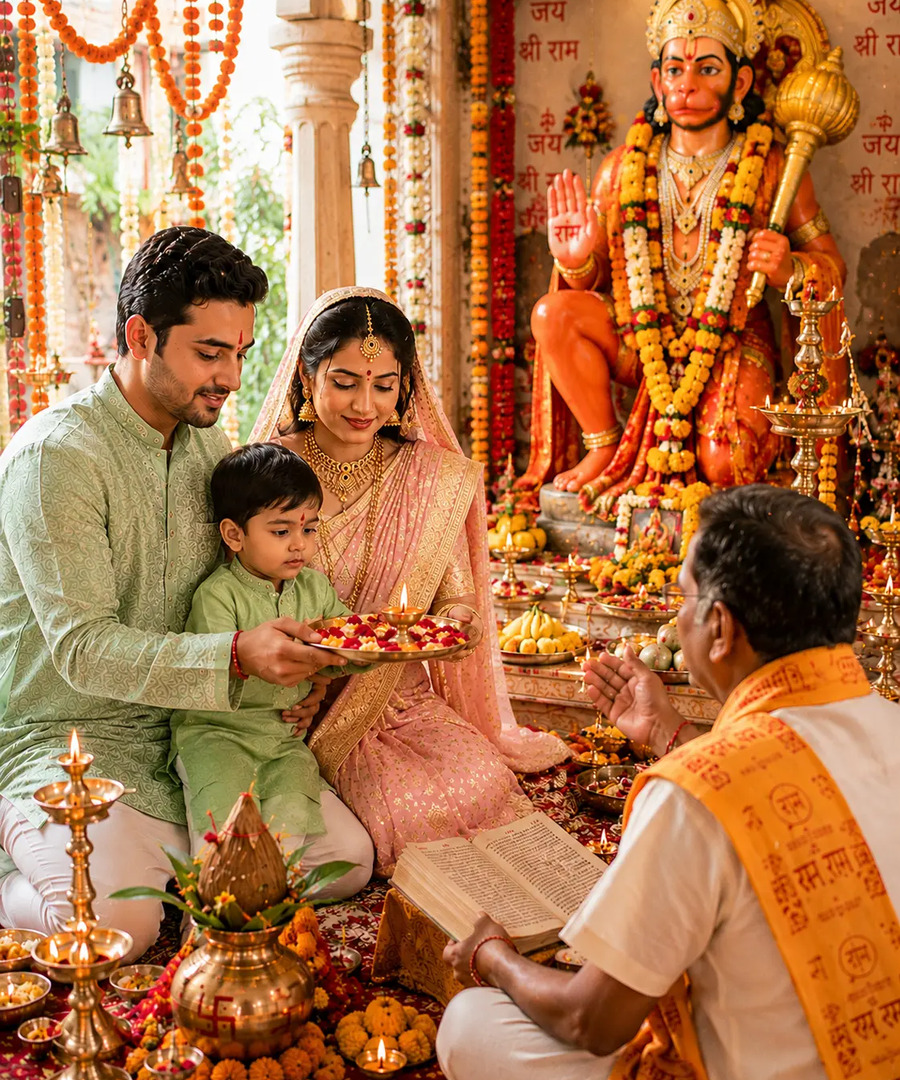
Lord Hanuman in a traditional devotional setting — approved image awaiting upload
01 / 05
Lord Hanuman in a devotional setting
श्री हनुमान
New Delhi, India · Asia/Kolkata · North Indian tradition
Upcoming date not verified
No verified upcoming occurrence is available. Automatic Panchang synchronization is not connected; consult your local Panchang.
New Delhi is the configured reference location; city selection is not yet available. The northern observance follows the Purnima tithi prevailing at local sunrise. Timings appear only when a verified record labels them explicitly — nothing is calculated or guessed here. The shared current-year-plus-nine window rolls forward automatically, but verified Panchang coverage is not yet connected.
The date above is for the North Indian tradition only. Other regions observe on different days:
हनुमान जयंती पूजा विधि
General devotional guidance, not a substitute for a priest. Practices vary by family, temple and region; not every offering is compulsory, and fasting is optional.
Tidy the space and set up a clean altar on a raised platform with a fresh cloth.
Many devotees bathe early and wear clean, simple clothes. Red or saffron is customary in some families, never required.
Place a respectful image or murti of Hanuman Ji. Some families include Shri Ram and Sita Mata alongside.
Light a ghee or oil diya on a stable, non-flammable plate. Keep incense away from cloth, flowers and children.
Offer flowers, including marigold where it is customary, with a short prayer.
Offer boondi, besan laddoo, gud-chana, fruit or another prasad your region traditionally uses.
Some temples and families offer sindoor mixed with oil, or a chola. Follow your tradition and temple rules; it is not compulsory at home.
Recite or listen to the Hanuman Chalisa, Sundarkand or other prayers from your tradition, using a trusted printed edition.
Perform aarti with sincerity and offer a closing prayer of gratitude.
Distribute prasad and do a small act of service or kindness, in the spirit of Hanuman’s humility.
पूजा सामग्री
Tick items as you gather them; your progress is saved on this device.
0 of 12 items prepared12 में से 0 सामग्री तैयार
Items depend on family, region and the chosen puja; optional items are not universal requirements. · सामग्री परिवार, क्षेत्र और चुनी हुई पूजा अनुसार बदलती है।
आध्यात्मिक महत्व
Hanuman’s love for Shri Ram asks nothing in return. In daily life it can mean doing our work as an offering and keeping a few quiet minutes for prayer.
Strength in Hanuman’s story is always used to protect and help. We can care for our bodies and use our abilities for others.
Leaping the ocean is remembered as courage in the face of the unknown. Small courage counts too: speaking honestly or starting a hard task.
Hanuman is praised as learned and thoughtful in speech. We can listen first and choose words with care.
He credited every success to Ram. Sharing credit and staying teachable keeps strength gentle.
Carrying the mountain for Lakshman shows service without hesitation. Helping a neighbour or volunteering continues that spirit.
Hanuman kept searching for Sita when others despaired. Regular practice and patience help us through slow, difficult work. These are matters of faith and character, not guaranteed outcomes.
बारह राशियों के लिए आध्यात्मिक चिंतन
Traditional spiritual reflections, not predictions or a substitute for professional advice. No wealth, health, marriage, career or future result is promised.
व्रत, भोग और सावधानियाँ
Some devotees fast until evening, some take only fruit and milk, and many do not fast at all. Rules differ by family and region; none are compulsory.
Children, elders, pregnant people and anyone with a medical condition or on medication should consult a doctor. Drink water and break any fast if you feel unwell.
Boondi, besan laddoo, gud-chana, fruit and other regional sweets are common. Prepare and store prasad hygienically, especially in warm weather.
Keep the altar clean, handle images respectfully and follow temple rules on dress, offerings and photography.
Use stable non-flammable holders, keep flames away from cloth and children, ventilate the room and never leave a flame unattended.
Where practices differ, follow your family tradition or a trusted local temple or priest.
Sacred narrative: Valmiki Ramayana (Kishkindha, Sundara and Yuddha Kandas) and Goswami Tulsidas’s Ramcharitmanas and Hanuman Chalisa. References explain traditions, not a verified annual local date.