मेष · Aries
Mesh
Theme: Patience
Channel your energy into calm preparation and kind words.
A Day of Prayer, Devotion and Togetherness
प्रेम, श्रद्धा और समर्पण का पर्व
करवा चौथ
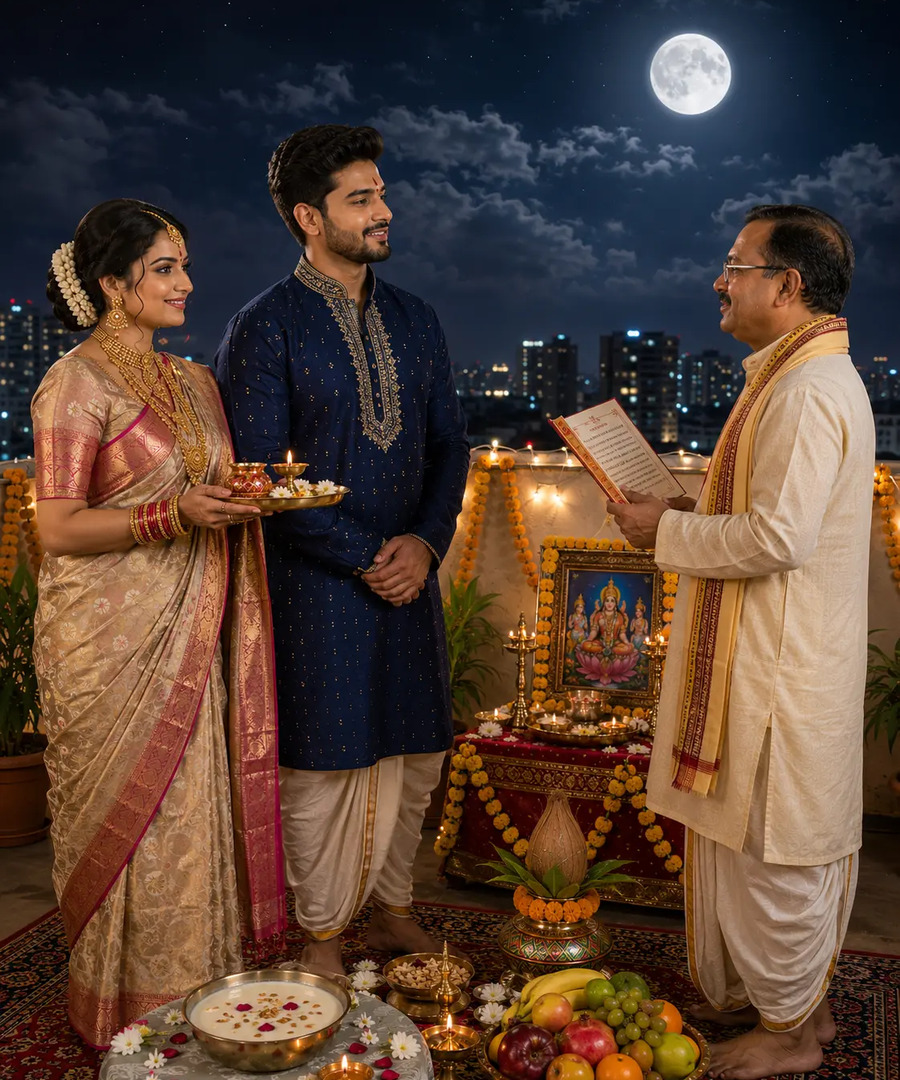
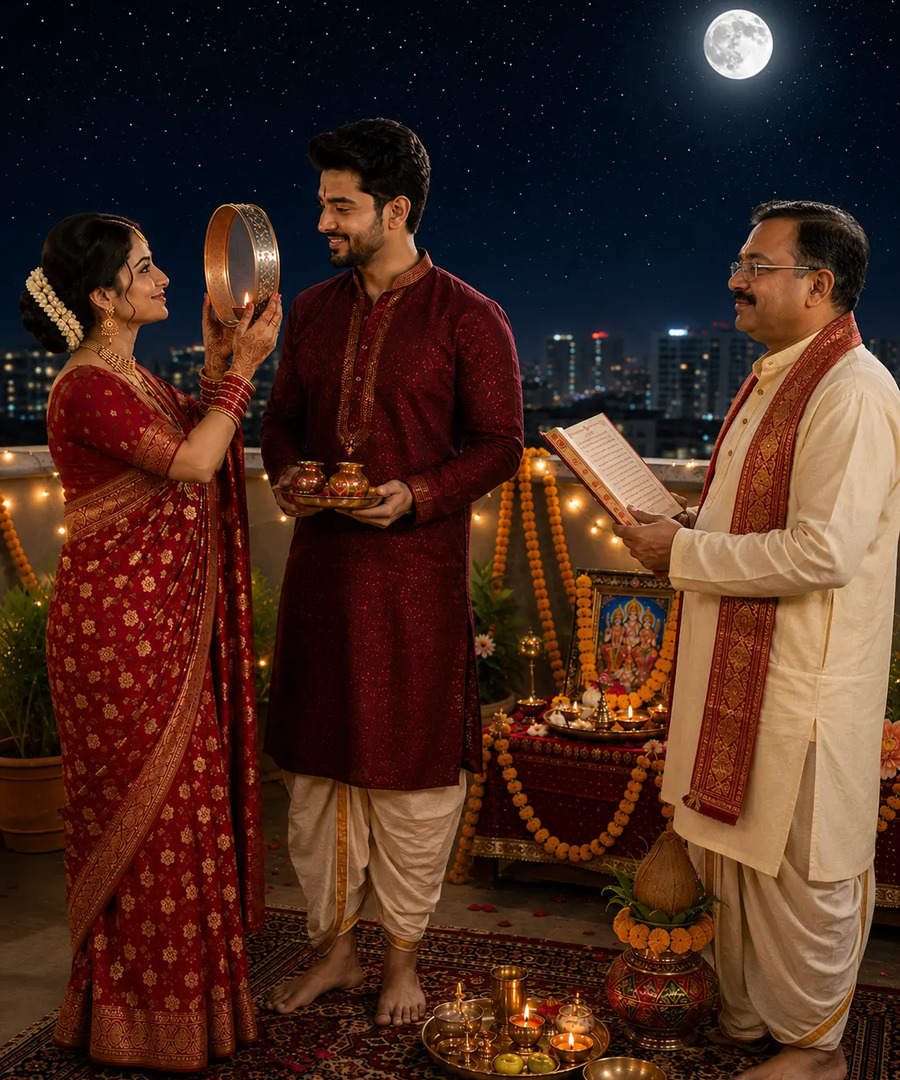
Karwa Chauth is a traditional Hindu fasting and worship observance, especially popular in many North Indian communities. Married women commonly observe the fast and pray for the well-being and longevity of their husbands. The day often includes Sargi before sunrise, traditional puja, listening to the Karwa Chauth Vrat Katha, and offering Arghya to the Moon after moonrise. Customs differ by family and region, and observances may vary.
करवा चौथ उत्तर भारत के अनेक समुदायों में विशेष रूप से मनाया जाने वाला पारंपरिक व्रत और पूजा का पर्व है। विवाहित महिलाएँ प्रायः अपने पति के स्वास्थ्य, सुख और दीर्घायु की कामना से यह व्रत रखती हैं। इस दिन सूर्योदय से पहले सरगी ग्रहण करने, पूजा करने, करवा चौथ की कथा सुनने और चंद्र दर्शन के बाद चंद्रमा को अर्घ्य देने की परंपरा है। रीति-रिवाज परिवार और क्षेत्र के अनुसार अलग-अलग हो सकते हैं।
Thu, 29 October 2026 · New Delhi
Image placeholder — to be replaced
Decorated Karwa Chauth puja thali — placeholder to be replaced
01 / 05
Karwa Chauth Puja Thali
करवा चौथ की पूजा थाली
Meaning and traditions
करवा चौथ की कथा और इतिहास
करवा चौथ की तिथि और शुभ मुहूर्त
Karwa Chauth Puja Muhurat and moonrise depend on your location. Please confirm the exact timings with a trusted local Panchang.करवा चौथ की पूजा और चंद्र दर्शन का समय आपके स्थान के अनुसार बदल सकता है। कृपया सही समय की पुष्टि विश्वसनीय स्थानीय पंचांग से करें।
Date, tithi, puja muhurat and moonrise verified for New Delhi via Drik Panchang on 16 October 2026. Other cities differ (e.g. Mumbai puja 6:07–7:22 PM).
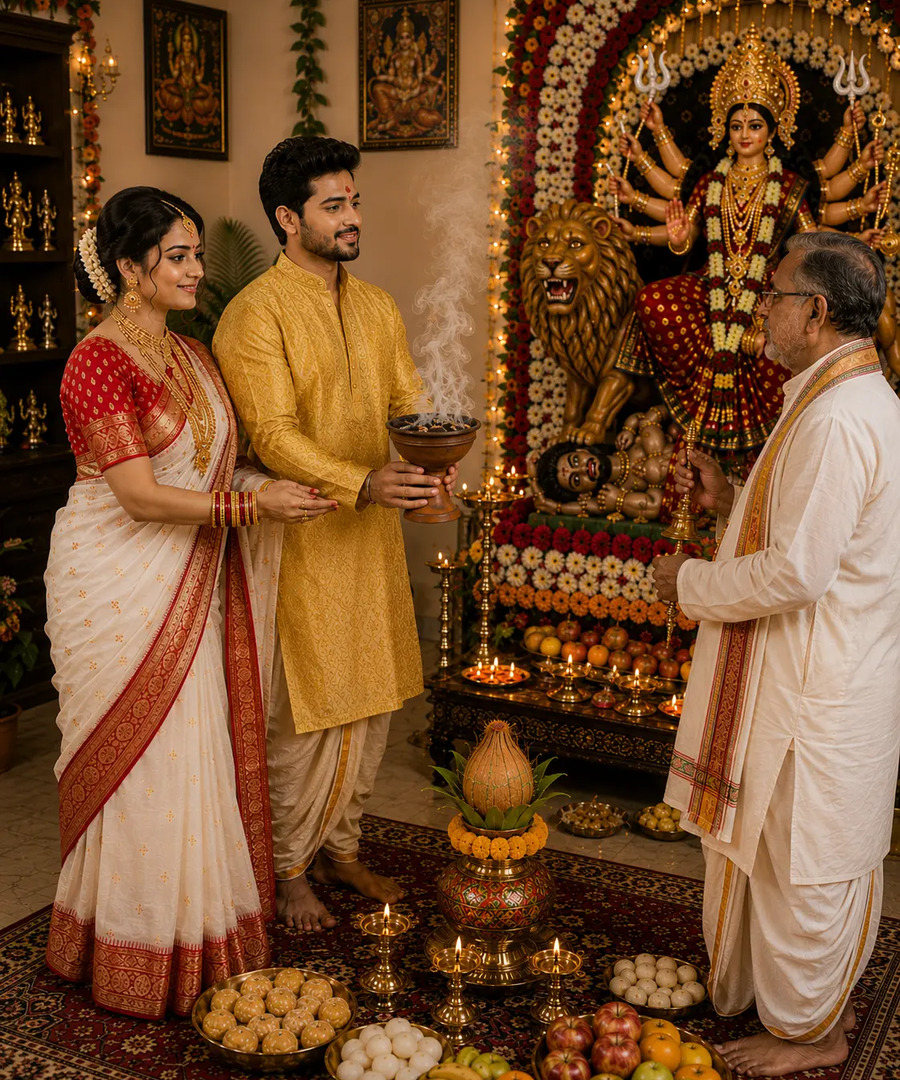
Karwa Chauth is traditionally associated with marital devotion and prayers for a spouse's well-being. Women commonly worship Maa Gauri (Parvati) — revered as the ideal of devoted married life — together with Lord Shiva and their family, and in some traditions Chauth Mata.
Observances differ between regions and households. These are religious beliefs held with respect, not guaranteed outcomes, and fasting practices are personal.
करवा चौथ वैवाहिक श्रद्धा और जीवनसाथी के कल्याण की प्रार्थना से जुड़ा है। सरगी, व्रत कथा, करवा पूजा और चंद्र अर्घ्य इसके मुख्य अंग हैं, जो कृतज्ञता, देखभाल, प्रतिबद्धता और आपसी सम्मान का संदेश देते हैं। रीति-रिवाज परिवार अनुसार बदलते हैं; यह आस्था है, किसी परिणाम की गारंटी नहीं, और व्रत रखना व्यक्तिगत निर्णय है।
General devotional guidance; the sequence differs by family and region. Not every household follows every step.
Arrange the puja items; decorate the karwa and puja thali according to family tradition.
पूजा सामग्री एकत्र करें और परंपरा अनुसार करवा व पूजा थाली सजाएँ।
Before sunrise, eat the traditional Sargi meal, often given by the mother-in-law. Customs vary by family and community.
सूर्योदय से पहले सरगी ग्रहण करें, जो प्रायः सास देती हैं। रिवाज परिवार अनुसार अलग होते हैं।
The fast customarily begins at sunrise. Practices differ — some keep a nirjala fast, others take water or fruit. Strict fasting is not suitable for everyone.
व्रत प्रायः सूर्योदय से आरंभ होता है। कुछ निर्जल व्रत रखते हैं, कुछ जल या फल लेते हैं। कठोर व्रत सभी के लिए उचित नहीं है।
Clean the puja space; place the image of Maa Gauri / Shiva-Parvati family or the Karwa Chauth calendar, and arrange the items.
पूजा स्थल साफ़ करें; गौरा माँ / शिव परिवार का चित्र या करवा चौथ का कैलेंडर रखें और सामग्री सजाएँ।
Fill the karwa with water, apply roli and akshat, and offer flowers, sweets and diya according to family tradition.
करवे में जल भरें, रोली-अक्षत लगाएँ और परंपरा अनुसार फूल, मिठाई और दीपक अर्पित करें।
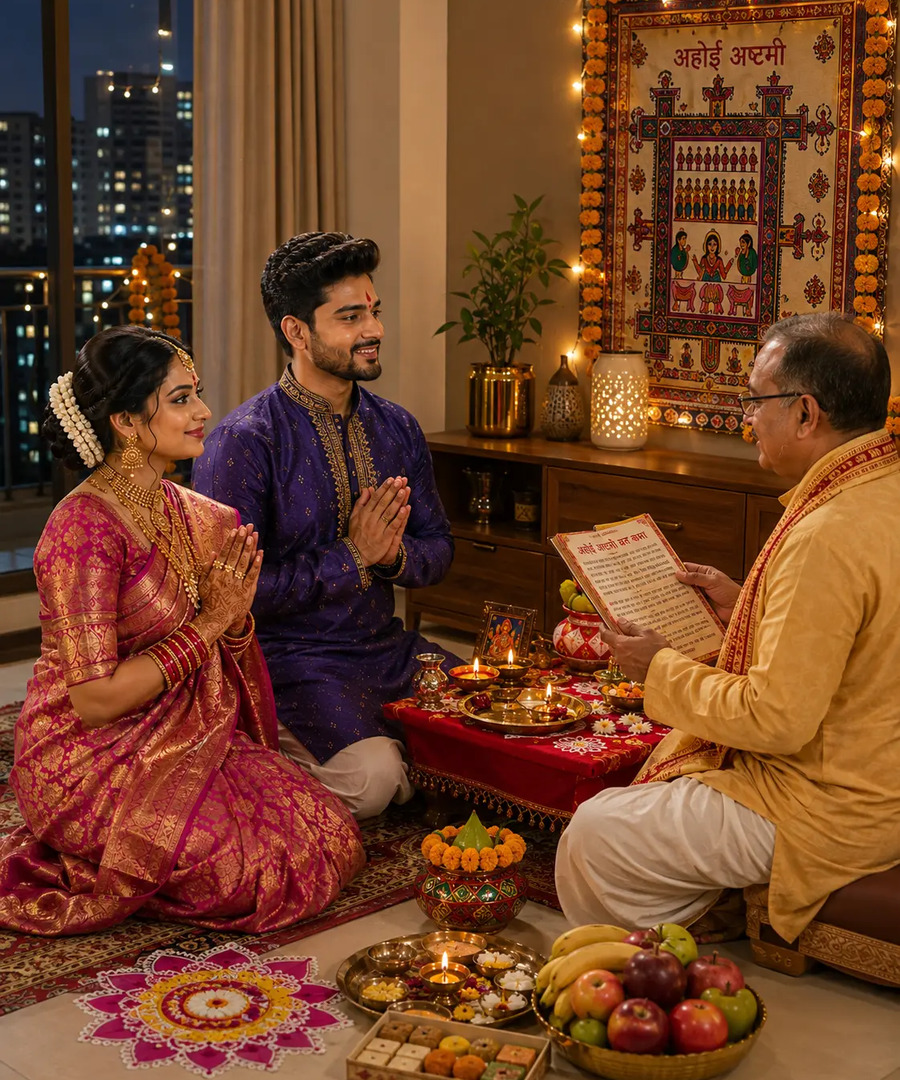
Listen to or read the Karwa Chauth katha, often in a group, passing the thalis as the elders guide.
करवा चौथ की कथा सुनें या पढ़ें; प्रायः सामूहिक रूप से थाली फेरते हुए।
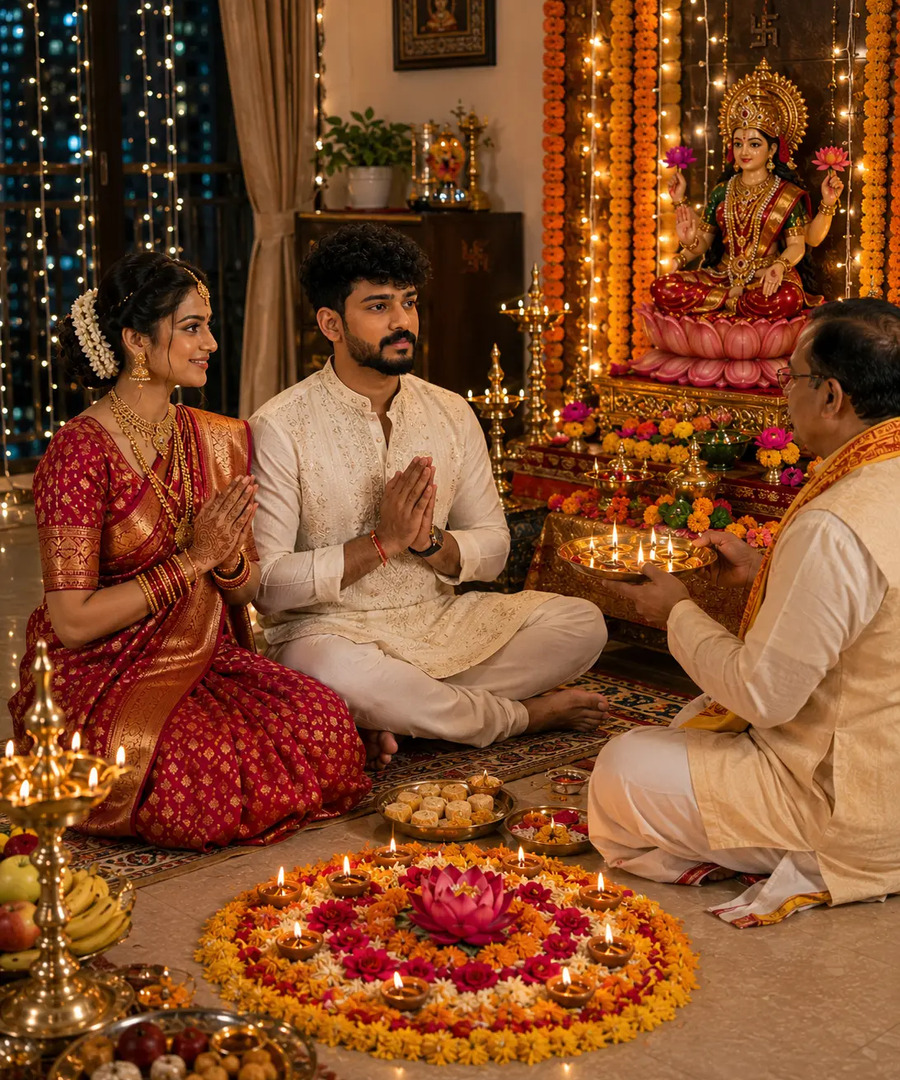
Perform the customary prayers and aarti during the local puja muhurat.
स्थानीय पूजा मुहूर्त में प्रार्थना और आरती करें।
Confirm your local moonrise time. Keep the sieve, karwa with water and diya ready.
स्थानीय चंद्रोदय का समय पुष्टि करें। छलनी, जल भरा करवा और दीपक तैयार रखें।
Offer water to the Moon from the karwa with a prayer, following your custom.
परंपरा अनुसार प्रार्थना के साथ करवे से चंद्रमा को अर्घ्य दें।
The fast is traditionally concluded after moon worship, often with water and a sweet offered by the husband. Customs differ.
चंद्र पूजा के बाद व्रत खोला जाता है, प्रायः पति के हाथ से जल और मिठाई लेकर। रिवाज अलग-अलग हो सकते हैं।
In common Karwa Chauth traditions, Sargi is the meal eaten before sunrise, before the fast begins. In many Punjabi and North Indian families the mother-in-law prepares or sends the Sargi as a blessing; in others the woman prepares it herself. It may include fruits, dry fruits and nuts, sweets such as pheni or mathri, and other household-specific foods.
An example Sargi (not mandatory): a bowl of milk-soaked pheni or a light kheer, seasonal fruit, a handful of soaked almonds and walnuts, a paratha or roti with curd, and coconut water or plain water.
Before a fast, balanced food and good hydration help — include water-rich fruits, some protein and fibre, and avoid very salty or fried foods that increase thirst.
Fasting practices should be adapted to individual circumstances. People with medical conditions, those taking medication, pregnant people, and others with specific dietary needs should consult an appropriate healthcare professional before undertaking restrictive fasting. No one should be pressured to fast, and unsafe dehydration should be avoided.
सरगी सूर्योदय से पहले, व्रत आरंभ होने से पूर्व ग्रहण किया जाने वाला भोजन है, जिसे अनेक परिवारों में सास आशीर्वाद स्वरूप देती हैं। इसमें फल, मेवे, फेनी, मठरी या घर की अन्य परंपरागत चीज़ें हो सकती हैं। पर्याप्त पानी और संतुलित भोजन लें। व्रत अपनी परिस्थिति के अनुसार ही रखें। किसी बीमारी, दवा, गर्भावस्था या विशेष आहार आवश्यकता की स्थिति में कठोर व्रत से पहले डॉक्टर से सलाह लें। किसी पर व्रत का दबाव न डालें और शरीर में पानी की गंभीर कमी से बचें।
The story of Veeravati — a traditional devotional narrative, not a verified historical account.
Moonrise is the central moment of most Karwa Chauth observances. Traditionally, water is offered to the Moon from the karwa as arghya, with a prayer for the family's well-being. In many households a lit diya is placed in or beside a sieve (chhalni); the woman views the Moon through the sieve and then her husband, after which the fast is concluded.
The exact sequence differs by family and region. Confirm your local moonrise time, as it changes by city. If the Moon is not visible because of clouds, there is no single universal solution — families follow their own customs or the guidance of a trusted priest or elder.
चंद्रोदय करवा चौथ का मुख्य क्षण है। करवे से चंद्रमा को जल का अर्घ्य दिया जाता है। अनेक परिवारों में छलनी में दीपक रखकर पहले चंद्रमा और फिर पति को देखा जाता है, उसके बाद व्रत खोला जाता है। क्रम परिवार अनुसार बदलता है। स्थानीय चंद्रोदय का समय पुष्टि करें; बादल होने पर अपनी परंपरा या विश्वसनीय पंडित जी का मार्गदर्शन लें।
Customs differ by region and household. No particular clothing colour, ornament or decoration is compulsory.
थाली सजाना, करवा तैयार करना, मेहंदी व उत्सव के परिधान, सामूहिक कथा और थाली फेरना, संध्या पूजा, चंद्र अर्घ्य और परंपरा अनुसार व्रत खोलना — ये प्रमुख रस्में हैं। कोई विशेष रंग, आभूषण या सजावट अनिवार्य नहीं है।
0 of 17 items prepared
The list varies by region and family tradition. · सामग्री क्षेत्र और परिवार की परंपरा अनुसार बदल सकती है।
Order Puja SamagriHealth precautions: strict fasting is not suitable for everyone. Fasting practices should be adapted to individual circumstances. People with medical conditions, those taking medication, pregnant people, and others with specific dietary needs should consult an appropriate healthcare professional before undertaking restrictive fasting. No one should be pressured to fast, and unsafe dehydration should be avoided. Never leave diyas unattended.
व्रत अपनी परिस्थिति के अनुसार ही रखें। किसी बीमारी, दवा, गर्भावस्था या विशेष आहार आवश्यकता की स्थिति में कठोर व्रत से पहले डॉक्टर से सलाह लें। किसी पर व्रत का दबाव न डालें और शरीर में पानी की गंभीर कमी से बचें। जलते दीपक को कभी अकेला न छोड़ें।
Traditionally, the fast begins at sunrise after Sargi and continues until moon worship. Many observe it nirjala (without food or water), while others take water, milk or fruit depending on family custom and health. The fast is traditionally concluded after arghya, often with water and a sweet from the husband, followed by a festive meal.
Fasting rules differ by region and household, and not every person follows the same practice. Fasting is not compulsory for everyone — prayer and participation are equally meaningful. Avoid unsafe fasting or dehydration.
परंपरा अनुसार सरगी के बाद सूर्योदय से चंद्र पूजा तक व्रत रखा जाता है। कई निर्जल व्रत रखती हैं, कुछ स्वास्थ्य व परंपरा अनुसार जल, दूध या फल लेती हैं। अर्घ्य के बाद पति के हाथ से जल व मिठाई लेकर व्रत खोला जाता है। व्रत सभी के लिए अनिवार्य नहीं है; असुरक्षित व्रत से बचें।
ॐ नमः शिवाय॥
Om Namah Shivaya.
Salutations to Lord Shiva — the Panchakshari mantra, widely used in Shiva worship.
ॐ उमामहेश्वराभ्यां नमः॥
Om Umamaheshvarabhyam Namah.
Salutations to Uma (Parvati) and Maheshvara (Shiva) together — a common name-mantra in Shiva-Parvati worship.
वक्रतुण्ड महाकाय सूर्यकोटि समप्रभ। निर्विघ्नं कुरु मे देव सर्वकार्येषु सर्वदा॥
Vakratunda mahakaya suryakoti samaprabha, nirvighnam kuru me deva sarvakaryeshu sarvada.
O Lord with the curved trunk and mighty form, radiant as a million suns, remove obstacles from all my works, always. Traditional Ganesha shloka (Karwa Chauth coincides with Vakratunda Sankashti).
दधिशङ्खतुषाराभं क्षीरोदार्णवसम्भवम्। नमामि शशिनं सोमं शम्भोर्मुकुटभूषणम्॥
Dadhi-shankha-tusharabham kshirodarnava-sambhavam, namami shashinam somam shambhor-mukuta-bhushanam.
I bow to the Moon — white as curd, conch and snow, born of the ocean of milk, the ornament of Shiva's crown. Traditional Chandra shloka from the Navagraha stotra.
हे गौरी माँ, मेरे परिवार को स्वास्थ्य, प्रेम और सद्भाव का आशीर्वाद दें।
He Gauri Maa, mere parivar ko swasthya, prem aur sadbhav ka ashirvad dein.
A simple Hindi devotional prayer written for this page (not an ancient mantra): 'O Mother Gauri, bless my family with health, love and harmony.'
Spiritual, personal and cultural values — not guarantees of longevity, health, wealth or any supernatural result. Someone who does not fast is no less devoted.
भक्ति और कृतज्ञता
आपसी देखभाल
पारिवारिक जुड़ाव
प्रतिबद्धता और संवाद
आत्मचिंतन और संयम
सांस्कृतिक निरंतरता
साझा परंपराएँ
स्वास्थ्य और व्यक्तिगत चुनाव का सम्मान
Optional reflections inspired by traditional zodiac symbolism — not predictions. No result is guaranteed.
मेष · Aries
Theme: Patience
Channel your energy into calm preparation and kind words.
वृषभ · Taurus
Theme: Nourishment
Prepare Sargi or prasad lovingly for the family.
मिथुन · Gemini
Theme: Communication
Share a heartfelt conversation of gratitude with your partner.
कर्क · Cancer
Theme: Moonlit devotion
Chandra is your sign's lord — offer arghya with a peaceful heart.
सिंह · Leo
Theme: Generosity
Host or help with the katha gathering warmly.
कन्या · Virgo
Theme: Mindful order
Arrange the thali and samagri carefully in advance.
तुला · Libra
Theme: Harmony
Make the evening about mutual respect and balance.
वृश्चिक · Scorpio
Theme: Commitment
Reflect quietly on the promises that guide your relationship.
धनु · Sagittarius
Theme: Faith
Read the Vrat Katha and reflect on its message of sincerity.
मकर · Capricorn
Theme: Discipline with care
Keep a practice that respects your health and duties.
कुंभ · Aquarius
Theme: Community
Include friends or neighbours in the evening gathering.
मीन · Pisces
Theme: Loving devotion
Pray to Maa Gauri with an open, grateful heart.
संबंधित पर्व
Start the existing booking flow with the festival date preselected.