A note on tradition
The accounts below come from Puranic and epic tradition and are cherished as religious narratives, not historical claims. Stories and customs vary by region, community and family.
Vaishakha Shukla Tritiya · Vishnu & Lakshmi · Daan
“Akshaya” means that which does not diminish. Akshaya Tritiya is traditionally associated with prosperity, generosity, auspicious beginnings, charity and lasting spiritual merit — a day for worshipping Lord Vishnu and Goddess Lakshmi and sharing with others. Customs vary by region and family, and no material outcome is promised.
Akshaya Tritiya · Upcoming date not verified · Tithi not verified · New Delhi, India
Image placeholder — to be replaced
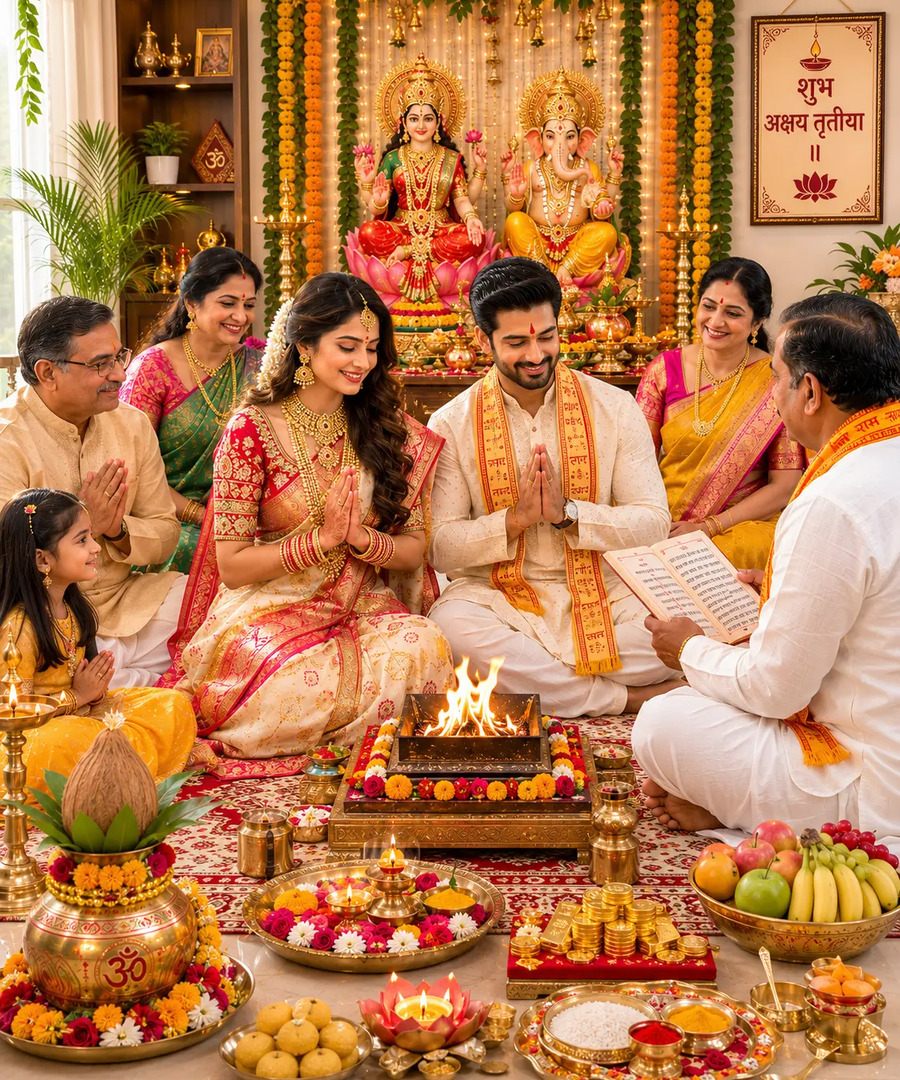
Traditional Akshaya Tritiya puja setup — approved image awaiting upload
01 / 05
Traditional Akshaya Tritiya puja setup
अक्षय तृतीया पूजा
New Delhi, India · Asia/Kolkata
Upcoming date not verified
No verified upcoming occurrence is available.
New Delhi is the configured reference location; city selection is not yet available. Akshaya Tritiya follows the Vaishakha Shukla Tritiya prevailing at local sunrise (or as your regional Panchang specifies). Any muhurat shown is specific to the listed city and Panchang method, not universally valid. Timings appear only from a verified record — nothing is calculated or guessed here. The shared current-year-plus-nine window rolls forward automatically, but verified Panchang coverage is not yet connected.
अक्षय तृतीया पूजा विधि
General devotional guidance, not a substitute for a priest. Customs differ among families and regions; no step, purchase or offering is compulsory, and fasting is optional.
Clean the worship area and set a fresh cloth on a raised platform.
Bathe, wear clean clothes and arrange the puja items within reach.
Place an image or idol of Lord Vishnu and Goddess Lakshmi as your family tradition prefers. Some families also worship Ganesha first.
Light a diya safely on a stable plate and offer water, flowers, kumkum, haldi and akshat as customary.
Offer fruits, sweets or traditional naivedya. Tulsi leaves are often added for Vishnu worship.
Recite Vishnu or Lakshmi prayers from your own tradition, using a trusted printed edition or a priest’s guidance.
Offer prayers for wisdom, gratitude, well-being and prosperity earned and used responsibly.
Give food, water, clothing or time to someone in need, according to your means.
Perform aarti where customary and share prasad with family and guests.
If you wish, begin a personal, educational, charitable or business activity. This is optional.
पूजा सामग्री
Tick items as you gather them; your progress is saved on this device.
0 of 13 items prepared13 में से 0 सामग्री तैयार
Items depend on family, region and the chosen puja; optional items are not universal requirements. · सामग्री परिवार, क्षेत्र और चुनी हुई पूजा अनुसार बदलती है।
आध्यात्मिक महत्व
Tradition holds that good deeds done on this day bear lasting (akshaya) spiritual merit. It is a reminder that kindness and devotion are what endure.
Honouring Vishnu and Lakshmi together joins prosperity with order, dharma and care for others.
The Akshaya Patra story centres on feeding everyone who comes. Sharing food, water or support continues that spirit.
The day invites gratitude for what we have, honest effort, discipline and the responsible use of wealth.
Because the whole day is traditionally considered auspicious, many begin new ventures or make purchases. Buying gold is a custom many follow, not a religious requirement; there is no need to spend beyond your means or take on debt.
These are spiritual and cultural beliefs. They encourage good intentions and conduct, but no particular wealth, success or financial return is guaranteed.
बारह राशियों के लिए आध्यात्मिक चिंतन
Traditional spiritual reflections, not predictions or a substitute for professional advice. Not financial advice; no wealth, business growth, health, marriage or future result is promised.
दान, व्रत और सावधानियाँ
Common forms of charity include food, water, clothing, grain or support for people in need. Sincerity matters more than amount; no expensive gift is required.
Some observe a full or partial fast and some do not fast at all. Practices vary by family and region. Children, elders, pregnant people and anyone with a health condition should consult a doctor and break any fast if unwell.
Fruits, sweets, kheer, sattu or other regional naivedya are common. Prepare and store prasad hygienically in warm weather.
Use stable, non-flammable holders, keep flames away from cloth and children, ventilate the room and never leave a flame unattended.
Buying gold or other items is a custom, not an obligation. Avoid financial pressure, unnecessary spending, high-interest debt or risky decisions; consult a qualified adviser for financial choices.
Follow your family custom or trusted local temple guidance and respect that others observe the day differently.
Sacred narratives draw on the Mahabharata and Puranic traditions; versions differ by region. References explain traditions, not a verified annual local date.