Surya’s journey into Makara · Harvest & gratitude

Makar Sankranti

मकर संक्रांति

Celebrate the Sun’s transition into Makara with prayers to Lord Surya, til-gud, charity and the joy of harvest. Explore traditions from Uttarayan to Pongal, Maghi and Magh Bihu, with respect for your family’s customs and local Panchang.

Upcoming date not verified · New Delhi, India

Book Pandit Ji
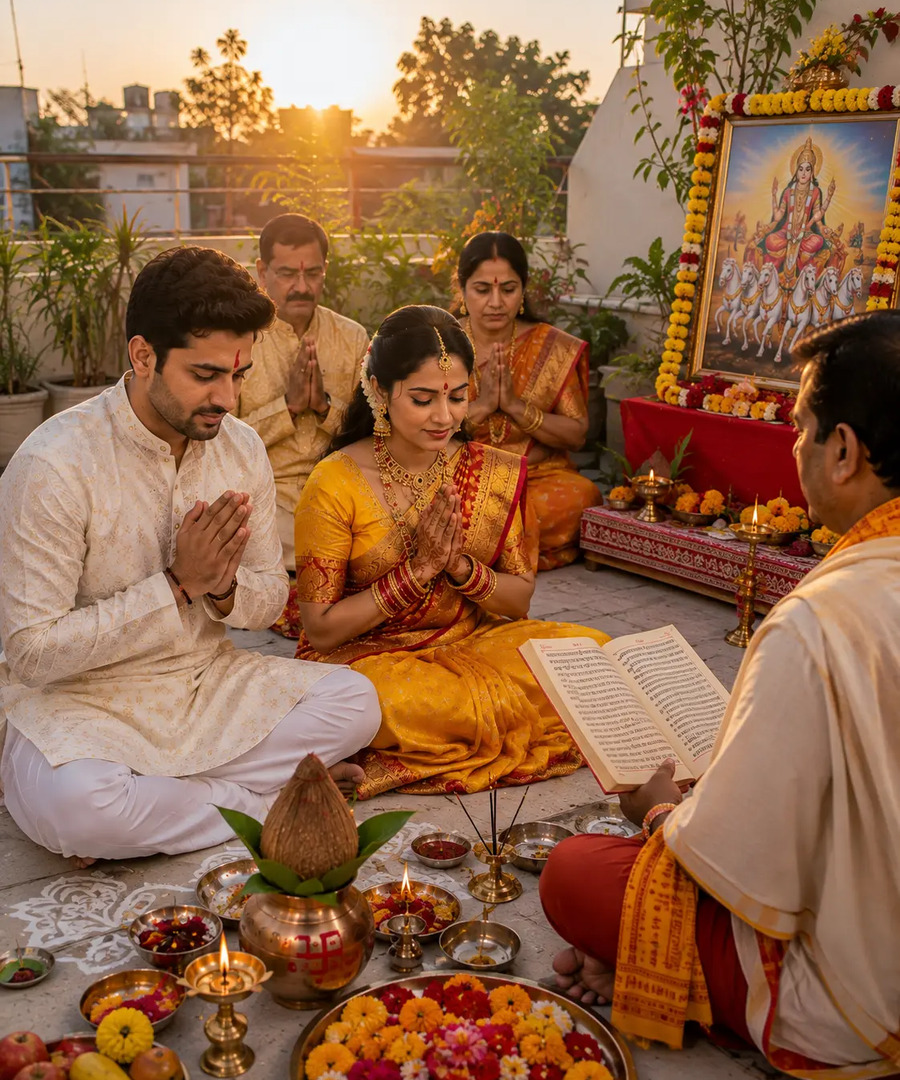
A family offering prayers at sunrise before an image of Surya Dev on his chariot

01 / 05

Worship of Lord Surya

सूर्य देव की उपासना

Story & History of Makar Sankranti

The Sun enters Makara

Makar Sankranti marks the Sun’s transition (Sankranti) into the sidereal zodiac sign Makara (Capricorn) in the Hindu solar calendar. Unlike most Hindu festivals, which follow lunar Tithis, it is fixed by this solar moment. Because Hindu calendars use the sidereal zodiac, the transition currently falls in mid-January, and its exact moment and the day of observance depend on the calculation method, location and local sunrise.

Uttarayana

Makar Sankranti is traditionally associated with the beginning of Uttarayana, the Sun’s northward journey, which many traditions regard as an especially auspicious half of the year. Astronomically, the winter solstice occurs in December; the traditional association of Uttarayana with Makar Sankranti reflects the sidereal calendar convention, and different traditions explain this differently.

Seasonal change

Across much of India the festival comes as winter begins to soften and days grow longer. Warm, nourishing foods such as sesame (til) and jaggery (gud) are customary at this time of year, and many families associate them with the season.

Gratitude for the harvest

In many agricultural regions, Makar Sankranti and its related festivals coincide with harvest time. Farmers and families give thanks to the Sun, the land, cattle and community for the year’s crops, sharing freshly harvested grain, sugarcane and sweets.

One season, many names

The same solar season is celebrated under different names: Uttarayan in Gujarat, Pongal in Tamil Nadu, Maghi in Punjab, Magh Bihu (Bhogali Bihu) in Assam, Khichdi in parts of Uttar Pradesh and Bihar, and Sankranti in Karnataka, Andhra Pradesh and Telangana. Customs, dates and emphasis differ, and none is presented here as the single correct form.

Snan, daan and devotion

Many devotees take a holy dip in rivers or at sacred confluences, offer prayers to Surya Dev and give charity (daan) such as til, grain, blankets or food. Large gatherings occur at places such as Prayagraj and Gangasagar. Participation is voluntary, and practices vary by family and region.

Makar Sankranti Date, Tithi & Muhurat

New Delhi, India · Asia/Kolkata

Upcoming date not verified

Observance basis
Solar Sankranti — Sun’s entry into sidereal Makara (not a lunar Tithi)
Sankranti moment
Not verified
Punya Kaal
Not verified
Maha Punya Kaal
Not verified
Lunar Tithi on the day
Not verified
Local sunrise & observance rule
Not verified — confirm with your local Panchang

No verified upcoming occurrence is available. Automatic Panchang synchronization is not connected; consult your local Panchang.

New Delhi is the service reference, not your detected location. The observance day depends on the exact transition moment relative to local sunrise and the regional rule; verified ten-year solar provider coverage is not connected, and no fixed Gregorian date is substituted.

Makar Sankranti Puja Vidhi

परंपरा अनुसार मकर संक्रांति पूजा विधि

Customs vary by region and family; choose the steps appropriate to your tradition.

  1. 1

    Prepare yourself and the space

    Rise early if your tradition and health allow, bathe and wear clean clothes. Prepare a clean place for worship, indoors or in a safe open area with a view of the sky.

  2. 2

    Pray to Lord Surya

    Face the rising Sun, if visible and safe, and offer prayers to Surya Dev in the words familiar to your family. A simple, sincere prayer is enough; no particular mantra is mandated here.

  3. 3

    Offer water (Arghya), where customary

    Many devotees offer water from a clean vessel towards the Sun, sometimes with flowers, til or a little jaggery. Never look directly at the Sun, and offer water where it will not create a slippery surface.

  4. 4

    Light a diya safely

    Place the diya on a stable, heat-resistant plate away from cloth, paper and kites, and never leave it unattended — especially outdoors or on windy rooftops.

  5. 5

    Offer traditional foods

    Offer til-gud, khichdi, Pongal, fruits, sugarcane or other foods traditional to your region as naivedya, then share them as prasad.

  6. 6

    Give charity (Daan)

    Many families give til, grain, jaggery, blankets, clothing or food to those in need. Give what you can afford, in a way that respects the dignity of those receiving it.

  7. 7

    Conclude with prayer or aarti

    Close with a familiar prayer or aarti according to your tradition, share prasad hygienically and extinguish lamps safely.

Outdoor and water observances: only bathe in rivers or ghats at designated, supervised spots; follow official crowd and safety instructions; do not enter deep or fast-flowing water; keep children and elders accompanied; dress warmly in cold weather.

Makar Sankranti Puja Samagri

चुनी हुई पूजा की सामग्री

0 of 14 items prepared14 में से 0 सामग्री तैयार

Items depend on family, region and the chosen puja; optional items are not universal requirements. · सामग्री परिवार, क्षेत्र और चुनी हुई पूजा अनुसार बदलती है।

Spiritual Significance of Makar Sankranti

कृतज्ञता, दान और नई शुरुआत

Gratitude to the Sun

Surya is revered as the visible source of light, warmth and life. Makar Sankranti is a day to give thanks for the Sun’s role in seasons, crops and daily life.

Seasonal transition

Longer days and the turn from deep winter are celebrated as a time of renewal and fresh beginnings, with warm seasonal foods and outdoor festivities.

Harvest and the land

In farming communities the festival honours the harvest and those who make it possible — the land, cattle and the labour of families.

Generosity and charity

Daan is central to many observances. Giving food, warmth and support to others is understood as an expression of gratitude rather than a transaction for reward.

Sharing food and sweetness

In Maharashtra, the greeting “Tilgul ghya, god god bola” — take til-gud and speak sweetly — expresses the wish to set aside bitterness and renew relationships.

Uttarayan · Gujarat

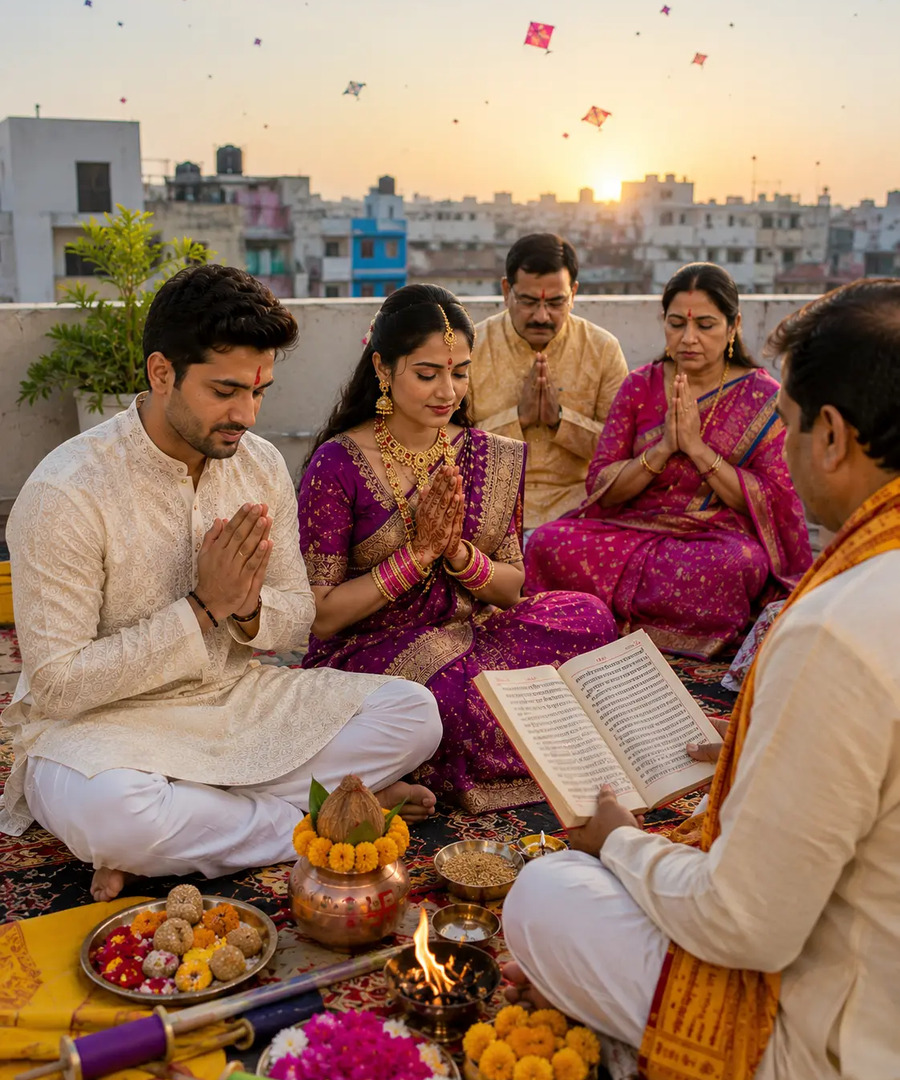
Uttarayan is celebrated with kite-flying from rooftops, family gatherings and seasonal foods such as undhiyu and chikki.

Pongal · Tamil Nadu

Thai Pongal, usually spread over several days, gives thanks to the Sun, cattle and the harvest; freshly harvested rice is boiled with milk and jaggery until it overflows.

Maghi · Punjab

Maghi follows Lohri and is observed with gurdwara visits, holy dips, fairs and charity; in Sikh tradition it also commemorates the Forty Liberated Ones (Chali Mukte) at Muktsar.

Magh Bihu · Assam

Magh (Bhogali) Bihu marks the end of the harvest season with community feasts, the bonfire structures called meji and traditional sweets such as pitha.

12 Rashi Guidance & Puja Impact

बारह राशियों के लिए आध्यात्मिक चिंतन

Optional reflections arranged by traditional zodiac names — spiritual reflection, not prediction or a mandatory Rashi ritual. No outcome for health, wealth, marriage or career is promised.

Mesh (Aries) · मेष

Guidance
Turn fresh energy into a disciplined new beginning rather than a rushed one.
Reflection or practice
Rise early on Sankranti morning and offer a short prayer of gratitude to Surya.
Spiritual significance
The Sun’s new course invites purposeful starts grounded in patience.
Practical suggestion
Write down one intention for the season and the first small step towards it.

Vrishabh (Taurus) · वृषभ

Guidance
Honour the harvest by appreciating what the land and others have provided.
Reflection or practice
Prepare or share a simple traditional dish with gratitude for those who grew the food.
Spiritual significance
Gratitude for abundance keeps contentment free of possessiveness.
Practical suggestion
Donate a portion of grain or food you would otherwise store.

Mithun (Gemini) · मिथुन

Guidance
Let “speak sweetly” guide your words during the festival.
Reflection or practice
Share til-gud with someone you have been distant from and offer a kind word.
Spiritual significance
Sweet speech, joined with sincerity, is a quiet form of devotion.
Practical suggestion
Send one message of reconciliation or appreciation today.

Kark (Cancer) · कर्क

Guidance
Extend family warmth to those who may be alone in the cold season.
Reflection or practice
Include an elder or neighbour in your Sankranti meal or prayer.
Spiritual significance
Care that reaches beyond one’s own home reflects the festival’s spirit of sharing.
Practical suggestion
Check on one person who may need company or warm clothing.

Singh (Leo) · सिंह

Guidance
Reflect the Sun’s generosity: give light without seeking attention.
Reflection or practice
Offer Arghya with humility and dedicate one act of service anonymously.
Spiritual significance
Leadership modelled on the Sun shines for all without asking for recognition.
Practical suggestion
Help organize a community food or blanket drive without taking credit.

Kanya (Virgo) · कन्या

Guidance
Bring care and order to responsible, well-planned charity.
Reflection or practice
Prepare daan items thoughtfully so they are clean, useful and respectfully given.
Spiritual significance
Mindful service transforms detail-orientation into compassion.
Practical suggestion
Ask a local shelter what is actually needed before donating.

Tula (Libra) · तुला

Guidance
Seek balance as the season turns — between celebration and restraint.
Reflection or practice
Spend quiet time in prayer before joining the festivities.
Spiritual significance
Harmony with nature’s cycles encourages inner balance.
Practical suggestion
Choose eco-friendly decorations and kites to keep celebration in balance with nature.

Vrishchik (Scorpio) · वृश्चिक

Guidance
Let the turning Sun mark a release of old resentment.
Reflection or practice
Offer til with a prayer to let go of one grievance.
Spiritual significance
Inner renewal can accompany the outer change of season.
Practical suggestion
Speak or write to someone with whom you wish to renew trust.

Dhanu (Sagittarius) · धनु

Guidance
The Sun leaves Dhanu for Makara; reflect on wisdom you wish to carry forward.
Reflection or practice
Read or listen to a devotional or reflective text after morning prayer.
Spiritual significance
Transitions are opportunities to turn learning into lived practice.
Practical suggestion
Choose one value you will practise deliberately in the coming months.

Makar (Capricorn) · मकर

Guidance
The Sun enters your sign in traditional reckoning; meet it with humble discipline.
Reflection or practice
Offer Arghya and commit to a steady routine for the season ahead.
Spiritual significance
Discipline joined with gratitude dignifies everyday effort.
Practical suggestion
Set one realistic daily habit and keep it for the next week.

Kumbh (Aquarius) · कुंभ

Guidance
Let concern for the community find practical expression.
Reflection or practice
Join or support a community feast, cleanup or charity drive.
Spiritual significance
Service to many reflects the festival’s spirit of shared harvest.
Practical suggestion
Volunteer an hour of time rather than only donating money.

Meen (Pisces) · मीन

Guidance
Let devotion and compassion express themselves through respect for nature.
Reflection or practice
Offer water mindfully and keep rivers and ghats clean after any snan.
Spiritual significance
Reverence for water and sunlight connects devotion with care for creation.
Practical suggestion
Carry back all plastic and offerings packaging from any river visit.

Makar Sankranti Precautions & Practical Tips

सुरक्षा और व्यावहारिक मार्गदर्शन

Use diyas safely

Keep diyas on stable, heat-resistant surfaces, away from kites, paper and cloth, sheltered from wind, and never unattended.

Give charity responsibly

Donate useful, clean items through trusted channels and treat recipients with dignity. Avoid crowding or creating unsafe stampedes during distributions.

Stay safe during holy dips

Use only designated, supervised bathing areas; avoid deep or fast-flowing water; follow police and administration instructions at crowded melas; watch for cold exposure.

Fly kites safely

Fly kites in open spaces away from roads and power lines. Never try to retrieve kites tangled in electric wires.

Avoid dangerous rooftops

Use only rooftops with secure parapets, keep children supervised and never walk backwards near edges while flying kites.

Avoid prohibited or hazardous kite string

Do not use synthetic, glass-coated or metallic manja, which injures people, birds and animals and is banned in many places. Follow local rules; plain cotton thread is safer.

Protect birds and animals

Avoid flying kites at dawn and dusk when birds are most active, and dispose of loose string carefully. Contact local rescue services for injured birds.

Respect local rules and traditions

Follow local regulations on kites, crowds and fire, and respect neighbours’ and other regions’ customs.

Frequently Asked Questions About Makar Sankranti

Related Festivals

Sources & Tradition Notes

These references describe traditions and general calendar information, not a verified local calculation for your city. Regional customs vary.

Celebrate with gratitude and care

Confirm your local Sankranti moment and Punya Kaal before planning time-sensitive observances.