Prahlad’s devotion · Victory over arrogance

Holika Dahan

होलिका दहन

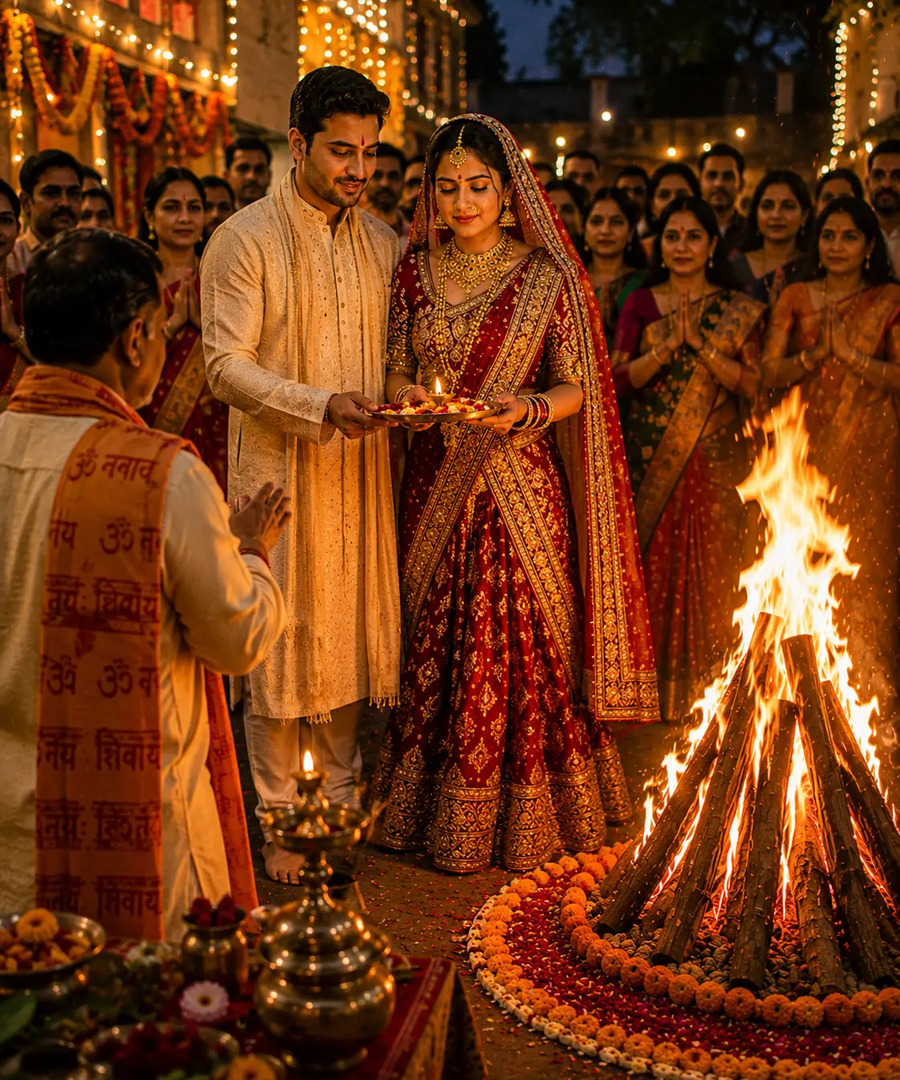
The sacred bonfire lit on Phalguna Purnima, the eve of Rangwali Holi. It recalls the young devotee Prahlad, who stayed faithful to Lord Vishnu, and Holika, who was consumed by the fire meant to harm him — a traditional story of devotion prevailing over arrogance. Customs vary by family and region; timings should follow a trusted local Panchang.

Upcoming date not verified · New Delhi, India

Book Pandit Ji
Existing image of a traditional Holika Dahan wood pyre burning inside a marigold rangoli circle at dusk

01 / 05

Traditional Holika Dahan bonfire

होलिका दहन की अग्नि

Story & History of Holika Dahan

Hiranyakashipu’s arrogance

In the Puranic tradition, especially as told in the Bhagavata Purana, the asura king Hiranyakashipu obtained a boon that he believed made him nearly invincible. Growing proud, he demanded that everyone in his kingdom worship him alone and forbade devotion to Lord Vishnu.

Prahlad’s devotion

His young son Prahlad remained a steadfast devotee of Vishnu. Despite his father’s commands, threats and repeated attempts to harm him, Prahlad continued to remember Vishnu with calm faith. His devotion is remembered as gentle, fearless and without hatred towards his father.

Holika and the fire

According to the widely told tradition, Hiranyakashipu’s sister Holika was believed to be protected from fire. She sat in a blazing pyre with Prahlad on her lap, intending to harm him. Prahlad continued praying to Vishnu; Holika was consumed by the fire while Prahlad emerged unharmed. Versions differ on how her protection failed — some say it worked only if she entered the fire alone, others describe a protective cloth passing to Prahlad.

Narasimha and the end of tyranny

The story continues with Vishnu appearing as Narasimha, the man-lion avatar, who ended Hiranyakashipu’s tyranny in a way that respected the conditions of his boon. This part of the account is celebrated separately at Narasimha Jayanti in many traditions.

Why a bonfire is lit

Holika Dahan, “the burning of Holika”, recalls this story. Communities build a pyre of wood and dried cow-dung cakes and light it on the night of Phalguna Purnima at the locally prescribed time. Many see the fire as the triumph of devotion over arrogance and of good over harmful intent.

Holika Dahan and Rangwali Holi

Holika Dahan is usually observed on the evening of Phalguna Purnima, and Rangwali Holi — the festival of colours, also called Dhulandi or Dhuleti in some regions — is celebrated the following day. In several regions the Holika observance is also linked with the new harvest, when ears of grain are roasted in the fire. Names, dates and customs vary between communities.

Holika Dahan Date, Tithi & Muhurat

New Delhi, India · Asia/Kolkata

Upcoming date not verified

Hindu month & Paksha
Phalguna · Shukla Paksha (tradition; local occurrence requires verification)
Purnima Tithi
Not verified
Purnima begins
Not verified
Purnima ends
Not verified
Pradosh Kaal
Not verified — requires validated local sunset
Bhadra period
Not verified — consult your local Panchang
Bhadra Punchha
Not verified or not applicable
Bhadra Mukha
Not verified or not applicable
Recommended Holika Dahan window
Not verified — consult your local Panchang
Observance rule
Evening of Phalguna Purnima in Pradosh Kaal after local sunset, avoiding Bhadra; if Bhadra covers Pradosh, many traditions use Bhadra Punchha and always avoid Bhadra Mukha

No verified upcoming occurrence is available. Automatic Panchang synchronization is not connected; consult your local Panchang.

New Delhi is the service reference, not your detected location. Holika Dahan requires validated local Purnima, sunset, Pradosh Kaal, Bhadra and regional conventions; the generic regional-calendar label alone does not calculate these rules. Verified ten-year provider coverage is not connected; no Gregorian recurrence or another festival’s date is substituted.
Holika Dahan Puja Vidhi

परंपरा अनुसार महाशिवरात्रि पूजा विधि

Choose the practices appropriate to your family, region and sampradaya. Not every devotee needs to perform every step.

  1. 1

    Preparation

    Bathe and wear clean, preferably cotton clothing. Learn where and when your community or society will hold Holika Dahan, and whether the pyre has local permission.

  2. 2

    Prepare the puja thali

    Arrange water in a lota, roli or kumkum, akshat if your family uses it, flowers, a coconut or other customary offering, raw cotton thread if used locally, and a diya or incense kept unlit until it is safe to use.

  3. 3

    Worship before the fire is lit

    Many families worship the Holika pyre in the daytime or before lighting, as their tradition allows. Offer water, roli, akshat and flowers, and remember Prahlad’s devotion to Lord Vishnu.

  4. 4

    Thread or parikrama, where customary

    In some regions women wind raw cotton thread around the pyre and walk around it a set number of times before it is lit. Follow only your family’s or community’s custom, and only while the pyre is unlit.

  5. 5

    Prayer

    Pray in your own words for wisdom, humility and the removal of negativity, or recite a prayer or mantra given by your family, guru or Pandit Ji. No specific mantra is required for devotion.

  6. 6

    Lighting at the local muhurat

    The pyre is lit by designated organisers or the officiating priest at the time chosen from the local Panchang, usually after sunset in Pradosh Kaal while Purnima prevails and avoiding Bhadra where possible.

  7. 7

    Offerings to the fire according to custom

    Some families offer new grain such as wheat or barley ears, coconut or other customary items from a safe distance. Throw nothing from close range, and offer nothing plastic, synthetic or chemically treated.

  8. 8

    Respectful participation

    Keep a safe distance, watch children closely and follow the organisers’ instructions. Circling a burning fire is not required; prayer from a safe distance is complete devotion.

  9. 9

    Concluding prayers

    Offer a final prayer, greet elders and share prasad. Some families take a little cooled ash home the next day according to custom; never handle hot ash or embers.

Holika Dahan Puja Samagri

चुनी हुई पूजा की सामग्री

Materials depend on family and regional traditions; choose what suits your practice. Optional items can be omitted.

0 of 12 items prepared12 में से 0 सामग्री तैयार

Items depend on family, region and the chosen puja; optional items are not universal requirements. · सामग्री परिवार, क्षेत्र और चुनी हुई पूजा अनुसार बदलती है।

Fire safety: stay well back from the pyre, keep a water bucket or sand nearby, wear close-fitting cotton clothes, tie back long hair and dupattas, and never add plastics, rubber, painted or treated wood to the fire. Follow local fire-service and society rules.

Spiritual Significance of Holika Dahan

भक्ति, विनम्रता और नई शुरुआत

Devotion over arrogance

Prahlad’s unwavering remembrance of Vishnu, set against Hiranyakashipu’s pride, is the heart of the festival. It is remembered as a reminder that sincere devotion matters more than power.

Humility

Prahlad never answered cruelty with hatred. Many devotees use the evening to reflect on their own ego and to approach others with humility.

Symbolic victory of good over evil

The fire is understood symbolically as burning away harmful intent and negativity. This is a religious and moral teaching; it does not promise any guaranteed material or spiritual result.

Letting go

Many people treat Holika Dahan as a moment to resolve to give up a harmful habit, an old grudge or negative thinking before the new season begins.

Community participation

Neighbourhoods gather around one shared fire, often organised together. The observance strengthens bonds across families, generations and communities.

Transition to Holi

Holika Dahan leads into Rangwali Holi the next day — from reflection and prayer to colour, forgiveness and joy. In agricultural regions it also marks the ripening of the new crop and the arrival of spring.

12 Rashi Guidance & Puja Impact

बारह राशियों के लिए आध्यात्मिक चिंतन

Optional Holika Dahan reflections arranged by traditional zodiac names, not a scientifically established prediction or a Rashi-specific religious rule. Anyone may choose any suitable practice; no future outcome is promised.

Mesh (Aries)

Guidance
Let the evening temper quick reactions; stand quietly before the fire for a moment before joining the celebrations.
Devotional significance
Prahlad’s calm courage shows strength without aggression.
Suggested practice
Choose one situation where you will respond patiently this week.
Personal reflection
Where does impatience cost me peace?

Vrishabh (Taurus)

Guidance
Keep offerings simple and seasonal, valuing sincerity over abundance.
Devotional significance
Holika’s story reminds that possessions and protections cannot replace faith.
Suggested practice
Donate one useful item you no longer need.
Personal reflection
What am I holding onto out of habit rather than need?

Mithun (Gemini)

Guidance
Offer prayer in a few honest words and let go of one hurtful way of speaking.
Devotional significance
Prahlad spoke of devotion gently, even when challenged.
Suggested practice
Avoid gossip and harsh remarks during the festival days.
Personal reflection
Do my words build others up or wear them down?

Kark (Cancer)

Guidance
Join the family puja and help elders and children take part safely.
Devotional significance
Prahlad’s story is also a story of family tension met with love rather than resentment.
Suggested practice
Make peace with a family member through a kind call or visit.
Personal reflection
Which old hurt am I ready to forgive?

Singh (Leo)

Guidance
Approach the fire with humility, remembering how pride shaped Hiranyakashipu’s fall.
Devotional significance
The festival honours devotion over dominance.
Suggested practice
Help organisers or volunteers quietly, without seeking recognition.
Personal reflection
Where would humility make me more trustworthy?

Kanya (Virgo)

Guidance
Prepare the thali carefully, then let go of perfectionism once prayer begins.
Devotional significance
Devotion is valued for its sincerity, not for flawless ritual.
Suggested practice
Ensure only natural, untreated materials go to the pyre.
Personal reflection
Can I accept imperfection in myself and others?

Tula (Libra)

Guidance
Reflect on fairness and balance in your relationships as the community gathers.
Devotional significance
Shared worship around one fire honours harmony between neighbours.
Suggested practice
Include someone who might otherwise be left out of the celebrations.
Personal reflection
Where do I need more balance between giving and receiving?

Vrishchik (Scorpio)

Guidance
Use the quiet before the fire to release a resentment in prayer.
Devotional significance
The burning of Holika is often understood as letting harmful intent go.
Suggested practice
Write down a grudge privately, reflect on it and choose to set it aside — keep the paper away from the fire.
Personal reflection
What would I gain by letting this go?

Dhanu (Sagittarius)

Guidance
Read or listen to the story of Prahlad from a reliable source with family.
Devotional significance
Remembering the story keeps its teaching of faith alive.
Suggested practice
Discuss one lesson from the story with a child or friend.
Personal reflection
Which teaching do I want to carry into the new season?

Makar (Capricorn)

Guidance
Approach the observance steadily, with careful planning for safety and timing.
Devotional significance
Prahlad’s steadiness shows endurance rooted in faith rather than fear.
Suggested practice
Confirm the local muhurat and fire arrangements in advance.
Personal reflection
Is my discipline driven by devotion or by pressure?

Kumbh (Aquarius)

Guidance
Think of the wider community — fire volunteers, neighbours and those who cannot attend.
Devotional significance
Holika Dahan is a shared, community observance.
Suggested practice
Encourage an eco-friendly pyre without plastics or green wood.
Personal reflection
How can my celebration care for others and the environment?

Meen (Pisces)

Guidance
Let a few moments of silent prayer carry you into a gentle trust.
Devotional significance
Prahlad’s surrender to Vishnu is remembered as faith that remains calm in difficulty.
Suggested practice
Sit quietly at home after the observance and offer gratitude.
Personal reflection
What would it mean to trust more and worry less?

Holika Dahan Precautions & Practical Tips

सुरक्षा और व्यावहारिक मार्गदर्शन

Keep a safe distance

Stay well back from the flames and from the direction of smoke and sparks. Throw offerings from a safe distance or hand them to the organisers before lighting.

Supervise children

Keep children close and away from the fire, firecrackers and embers at all times. Assign an adult to watch them.

Avoid flammable clothing

Wear close-fitting cotton clothes; avoid synthetic fabrics, loose dupattas and long trailing garments near the fire. Tie back long hair.

Follow local fire-safety rules

Hold Holika Dahan only at permitted, open sites away from buildings, vehicles, electric wires and trees. Keep water, sand or an extinguisher ready, and know the local emergency number (112 in India).

No toxic or treated materials

Never burn plastics, rubber, tyres, painted or varnished wood, or chemically treated material. Use limited dry wood and cow-dung cakes, and avoid cutting green trees.

Respect public spaces

Do not light fires on roads or shared spaces without permission, and keep noise, smoke and crowding considerate. Ensure the fire is fully extinguished or supervised until it burns out.

Confirm the local muhurat

Purnima, Pradosh Kaal and Bhadra timings change with location. Check a trusted local Panchang or your temple before planning.

Frequently Asked Questions About Holika Dahan

Related Festivals

Sources & Tradition Notes

These sources describe Panchang guidance and religious or cultural traditions; links alone do not verify an upcoming local occurrence. Holika worship, offerings, thread customs and Bhadra conventions have regional and family variations. No scripture quotation or historical origin date is invented here.

Observe Holika Dahan with devotion and safety

Confirm your location’s Panchang and chosen tradition before planning time-sensitive observances.