The song of the Divine · Duty, devotion & discernment

Gita Jayanti

गीता जयंती

Honour the tradition of Lord Krishna’s teaching of the Bhagavad Gita to Arjuna on the field of Kurukshetra, remembered on Margashirsha Shukla Ekadashi. Explore the sacred narrative, worship, recitation and reflections on duty, action, knowledge and devotion, with respect for your family’s customs and local Panchang.

Upcoming date not verified · New Delhi, India

Book Pandit Ji

Image placeholder — to be replaced

Lord Krishna imparting the Bhagavad Gita’s teachings to Arjuna on the battlefield of Kurukshetra — suitable devotional image awaiting approval

01 / 05

Krishna’s teaching to Arjuna · Kurukshetra

कुरुक्षेत्र में श्री कृष्ण का उपदेश

Story & History of Gita Jayanti

The battlefield of Kurukshetra

In the Mahabharata tradition, two branches of the Kuru family stand arrayed for war at Kurukshetra. Arjuna, a leading Pandava warrior, asks his charioteer — Lord Krishna — to place the chariot between the two armies so he can see those he must face. The setting of the discourse is remembered as a moment of profound moral seriousness. These are sacred literary and devotional accounts; this page does not present them as independently verified historical events.

Arjuna’s moral dilemma

Seeing teachers, elders, relatives and friends on both sides, Arjuna is overcome by grief and confusion. He questions whether victory gained through the destruction of his own people can ever be right, and he lays down his bow. His dilemma — the collision of duty, love and fear of wrongdoing — is the human heart of the Gita’s opening. Retellings emphasize different details; this guide paraphrases the tradition without supplying invented verses.

Krishna’s guidance

Krishna responds not with a single command but with a wide-ranging teaching. He speaks about duty (dharma) and acting without attachment to results, about disciplined action, knowledge and devotion, and about seeing clearly in the midst of difficulty. The conversation restores Arjuna’s resolve to act according to his responsibility. Interpretations of these teachings differ across traditions and teachers, and this page does not present any single interpretation as universal.

The Gita within the Mahabharata

The Bhagavad Gita is a section of the Bhishma Parva of the Mahabharata, traditionally arranged in eighteen chapters. It is revered as a foundational text of Hindu philosophy and devotion, studied, chanted, translated and commented upon for centuries. Scholarly views on its composition and dating vary; religious reverence for the text does not depend on settling those scholarly questions.

Margashirsha Shukla Ekadashi

Gita Jayanti is traditionally observed on the Ekadashi (eleventh Tithi) of the bright fortnight of the month of Margashirsha. Festival tradition associates this day with the remembrance of the Gita’s teaching. Because Tithi boundaries depend on the lunar calendar, location and observance convention, the Gregorian date changes every year and must be confirmed with a local Panchang.

Gita Jayanti and Mokshada Ekadashi

In many traditions, Gita Jayanti coincides with Mokshada Ekadashi, an Ekadashi associated with devotion, fasting and remembrance. Some communities emphasize the Ekadashi observance, others the Gita recitation, and many honour both together. Whether and how the two are combined varies by family, region and sampradaya; neither observance is presented here as compulsory.

Recitation, study and Gita Daan

Devotees mark the day by reading or listening to the Bhagavad Gita, attending discourses, chanting selected chapters, and reflecting on its teachings. Where practiced, Gita Daan — gifting copies of the Gita — shares the text with others. A full recitation is cherished by some, but reading even a few verses with attention is a meaningful observance; no minimum is prescribed here.

Kurukshetra and Gita Mahotsav

Kurukshetra in Haryana is revered as the land of the Gita’s discourse, and large devotional gatherings, recitations and cultural programmes are held there around Gita Jayanti, often called Gita Mahotsav. These are living religious and cultural celebrations; programme details change each year, so confirm current schedules with official organizers before travelling.

Gita Jayanti Date, Tithi & Muhurat

New Delhi, India · Asia/Kolkata

Upcoming date not verified

Hindu month & Paksha
Margashirsha · Shukla Paksha (festival tradition; local occurrence requires verification)
Ekadashi Tithi
Not verified
Ekadashi Tithi begins
Not verified
Ekadashi Tithi ends
Not verified
Verified puja / recitation windows
Not verified — consult your local Panchang
Local sunrise & calendar convention
Not verified — confirm the local Panchang and chosen observance rule

No verified upcoming occurrence is available. Automatic Panchang synchronization is not connected; consult your local Panchang.

New Delhi is the service reference, not your detected location. Margashirsha Shukla Ekadashi — observed alongside Mokshada Ekadashi in many traditions — requires validated local Tithi, sunrise and regional observance rules. Verified ten-year provider coverage is not connected; no Gregorian recurrence or another festival’s date is substituted.

Gita Jayanti Puja Vidhi

परंपरा अनुसार गीता जयंती पूजा विधि

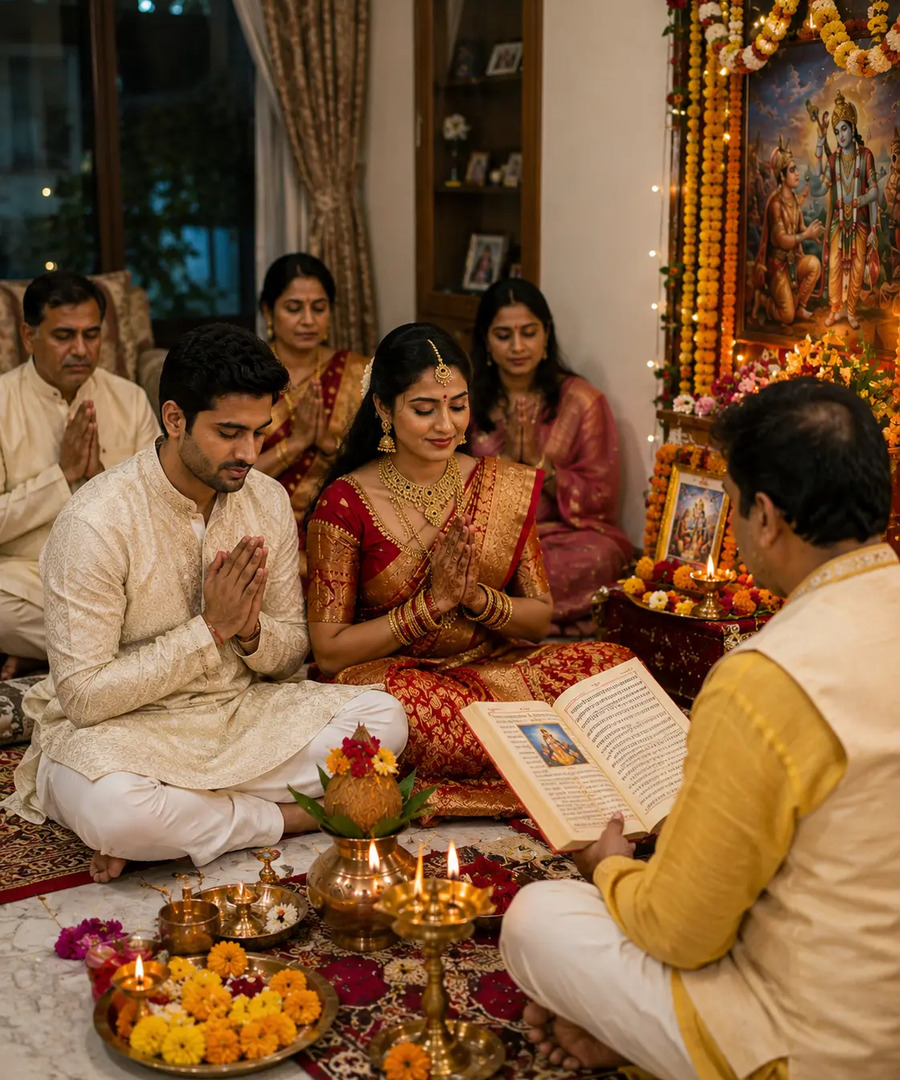
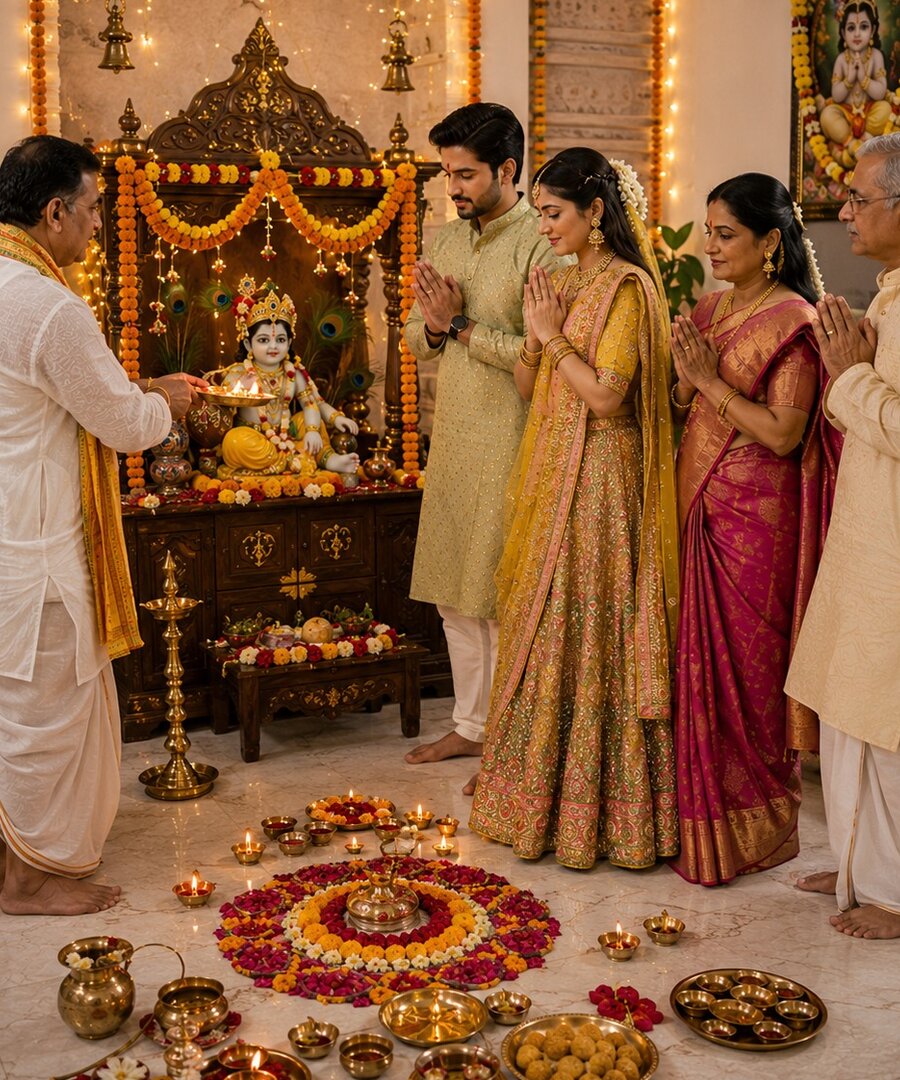
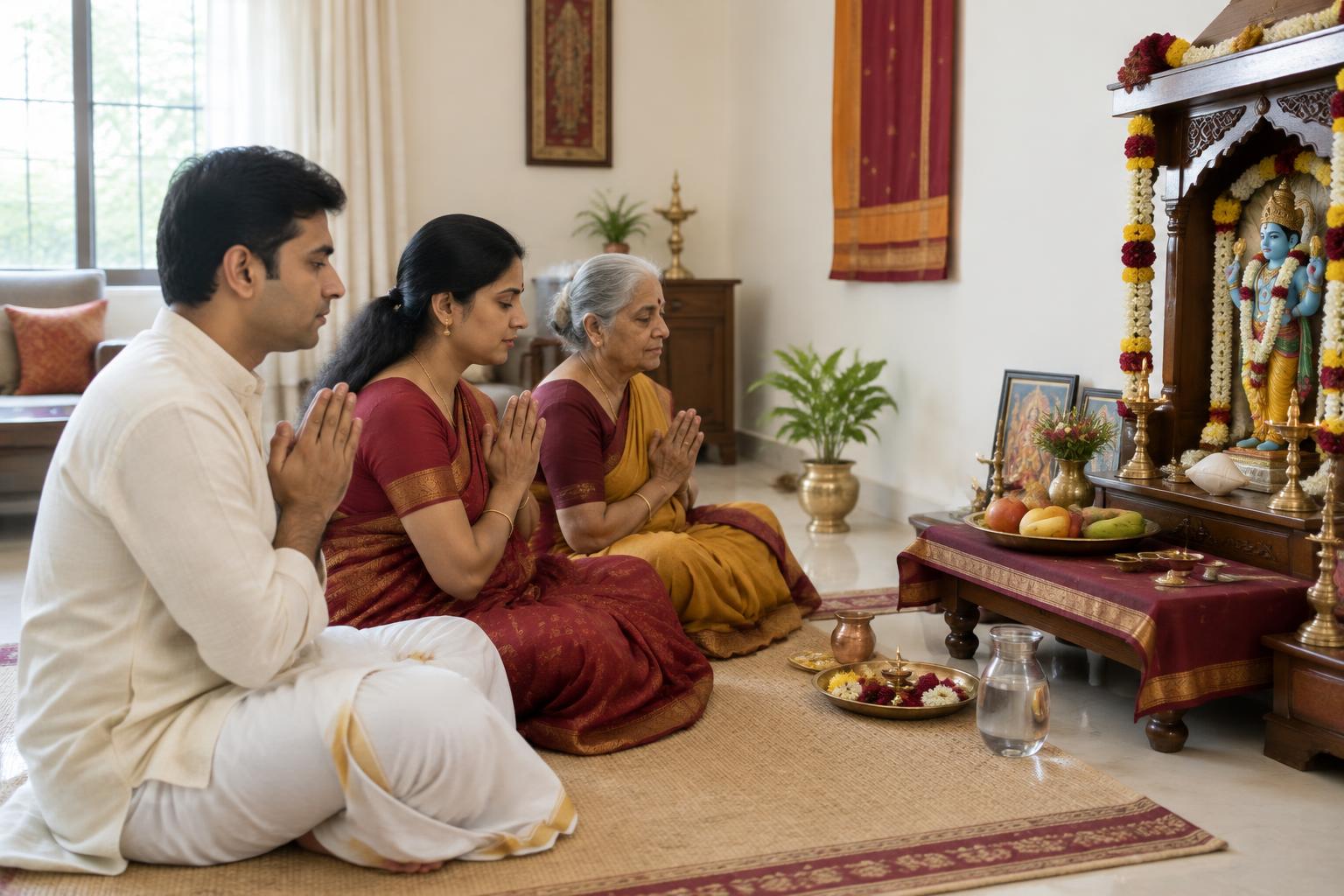
Choose the practices appropriate to your family, region and sampradaya. Not every devotee needs to perform every step.

  1. 1

    Clean and prepare the worship space

    Choose a clean, stable and quiet place for worship and reading. Gather only what your family or temple tradition uses; consult a trusted local Panchang for any time-sensitive observance.

  2. 2

    Bathe and prepare for worship

    Bathe and wear clean, comfortable clothes according to your circumstances. Fasting is practiced by some on Ekadashi but is not compulsory for everyone; follow your health and tradition.

  3. 3

    Place the Bhagavad Gita respectfully

    Set the Bhagavad Gita on a clean cloth or reading surface, treated with the reverence your tradition gives to sacred texts. Use an edition and translation you trust.

  4. 4

    Light a diya safely

    Place the diya on a heat-resistant plate, away from books, cloth and decorations, and never leave it unattended.

  5. 5

    Offer flowers and suitable offerings

    Offer flowers, clean water, fruit or customary naivedya according to your practice. Modest, sincere offerings are entirely appropriate.

  6. 6

    Offer prayers to Lord Krishna

    Pray in the words and forms familiar to your family or temple. No invented mantra is supplied here; a simple heartfelt prayer is sufficient.

  7. 7

    Read or listen to the Gita

    Read or listen to selected chapters or verses, or the whole text if that is your practice. A trusted translation, commentary or discourse can help understanding.

  8. 8

    Reflect on the teachings

    Spend a few quiet minutes considering what the verses mean for your own duties, decisions and conduct. Reflection is the heart of the observance.

  9. 9

    Join a discourse or gathering, where available

    Attend a Gita discourse, recitation or devotional gathering if one is accessible, in person or through a reliable source. Participation is voluntary.

  10. 10

    Conclude with prayer or aarti

    Close with a familiar prayer or aarti according to family or temple tradition, share prasad hygienically and extinguish lamps safely.

Gita Jayanti Puja Samagri

चुनी हुई पूजा की सामग्री

0 of 14 items prepared14 में से 0 सामग्री तैयार

Items depend on family, region and the chosen puja; optional items are not universal requirements. · सामग्री परिवार, क्षेत्र और चुनी हुई पूजा अनुसार बदलती है।

Spiritual Significance of Gita Jayanti

धर्म, कर्म, भक्ति और ज्ञान

Dharma and responsibility

The Gita begins with a crisis of duty. Its remembrance invites each person to consider their own responsibilities honestly — to family, work and community — and to act with integrity rather than avoidance.

Karma Yoga · selfless action

A central teaching of the Gita is to act wholeheartedly without being enslaved by anxiety about results. Remembered on Gita Jayanti, this encourages sincere effort joined with acceptance, not passivity or indifference.

Bhakti Yoga · devotion

The Gita honours loving devotion to the Divine as a path open to all. Gita Jayanti celebrations — prayer, kirtan and recitation — express this devotion in community and at home.

Jnana Yoga · understanding

The Gita values discernment: seeing situations clearly, questioning one’s motives and seeking wisdom. Study and reflection on the text are themselves acts of worship on this day.

Equanimity and self-discipline

The teaching of steadiness in success and difficulty speaks to ordinary life. Observing the day can be a reminder to cultivate patience, moderation and calm judgement.

Discernment in difficult decisions

Arjuna’s hesitation before a hard choice is deeply human. The Gita’s remembrance encourages facing difficult decisions with counsel, conscience and courage rather than fear.

Reading, sharing and study

Recitation, discussion and Gita Daan keep the text a living tradition. Sharing the Gita is most meaningful when paired with humility about the many interpretations it has inspired.

12 Rashi Guidance & Puja Impact

बारह राशियों के लिए आध्यात्मिक चिंतन

Optional Gita Jayanti reflections arranged by traditional zodiac names, not a scientifically established prediction or a Rashi-specific religious rule. Anyone may choose any suitable practice; no future outcome is promised.

Mesh (Aries) · मेष

Guidance
Channel courage into dutiful action rather than haste, as Arjuna learned to act with clarity.
Devotional significance
The Gita’s call to fulfil one’s duty can steady natural boldness into purposeful effort.
Suggested practice
Read a short passage on action and duty, then choose one responsibility to complete without delay.
Personal reflection
Where can I act bravely without acting impulsively?

Vrishabh (Taurus) · वृषभ

Guidance
Let steady devotion express itself through simple, consistent practice rather than display.
Devotional significance
The teaching of equanimity suits a patient temperament learning to hold both gain and loss lightly.
Suggested practice
Keep a small daily reading practice through the Gita Jayanti season.
Personal reflection
Which attachment to comfort or outcome can I loosen a little?

Mithun (Gemini) · मिथुन

Guidance
Use the gift of curiosity to study the Gita’s teachings deeply, not only to discuss them.
Devotional significance
Jnana Yoga values inquiry joined with reflection; listening is as sacred as speaking.
Suggested practice
Read one chapter with a trusted commentary and note one idea to sit with quietly.
Personal reflection
Do I seek understanding, or only more information?

Kark (Cancer) · कर्क

Guidance
Let care for others be guided by wisdom, as the Gita joins compassion with clear duty.
Devotional significance
Devotion expressed through Bhakti can hold tender feelings without being ruled by them.
Suggested practice
Offer a prayer for your family’s wellbeing, then reflect on one boundary that care requires.
Personal reflection
How can I care deeply without losing my own steadiness?

Singh (Leo) · सिंह

Guidance
Offer your natural leadership in service, letting the teaching, not the self, take centre stage.
Devotional significance
Selfless action — Karma Yoga — transforms pride in achievement into dignity in service.
Suggested practice
Help organize or support a Gita reading without seeking recognition.
Personal reflection
Can I lead while giving others the credit?

Kanya (Virgo) · कन्या

Guidance
Bring your care for detail to accurate, reverent study of the text.
Devotional significance
Discernment — telling the essential from the incidental — is itself a Gita virtue.
Suggested practice
Verify a verse reference in a reliable edition before sharing it.
Personal reflection
Does my pursuit of correctness leave room for devotion?

Tula (Libra) · तुला

Guidance
Reflect on balance: the Gita’s equanimity is not indecision but steadiness after choosing.
Devotional significance
Arjuna’s weighing of sides shows that seeing every view is a strength when joined with resolve.
Suggested practice
After reading, make one pending decision with honesty and calm.
Personal reflection
Where am I delaying a choice in the name of fairness?

Vrishchik (Scorpio) · वृश्चिक

Guidance
Meet intense feeling with the Gita’s teaching of self-mastery rather than suppression.
Devotional significance
The discipline of mind praised in the Gita can turn depth of emotion into depth of insight.
Suggested practice
Sit quietly after reading and observe one strong emotion without acting on it.
Personal reflection
What feeling asks for understanding rather than reaction?

Dhanu (Sagittarius) · धनु

Guidance
Let love of wisdom become lived practice, not only philosophy.
Devotional significance
The Gita joins knowledge to action; teaching is complete only when it shapes conduct.
Suggested practice
Choose one teaching you admire and practise it deliberately for a day.
Personal reflection
Which belief of mine is not yet visible in my behaviour?

Makar (Capricorn) · मकर

Guidance
Connect discipline with detachment: work diligently while holding results with open hands.
Devotional significance
Karma Yoga dignifies persistent effort and frees it from anxious grasping.
Suggested practice
Do one duty thoroughly today, then consciously release worry about its outcome.
Personal reflection
Can I work hard without letting the result own my peace?

Kumbh (Aquarius) · कुंभ

Guidance
Let concern for the wider world be grounded in personal practice and humility.
Devotional significance
The Gita’s vision of the Divine in all beings supports service that respects each person.
Suggested practice
Share a Gita teaching with someone in a way that honours their own views.
Personal reflection
Does my idealism make room for the person in front of me?

Meen (Pisces) · मीन

Guidance
Let devotion and imagination be anchored by the Gita’s call to clear seeing.
Devotional significance
Bhakti joined with discernment keeps tenderness from becoming confusion.
Suggested practice
Read a favourite verse slowly and write one sentence on what it asks of you.
Personal reflection
Where does my heart need the support of clear understanding?

Gita Jayanti Precautions & Practical Tips

सुरक्षा और व्यावहारिक मार्गदर्शन

Use a reliable edition or translation

Choose a respected edition or translation of the Bhagavad Gita. Translations and commentaries differ; acknowledge the one you use rather than presenting it as the only reading.

Verify chapter and verse references

Check chapter and verse numbers against a reliable edition before displaying or sharing them. Do not circulate quotations you cannot verify.

Read respectfully and at a comfortable pace

Recitation is not a race. Read or listen at a pace that allows understanding, and treat the text and fellow participants with respect.

Follow your own tradition for worship

Practices vary by family, temple and sampradaya. Follow the guidance of your own tradition; no step on this page is compulsory for everyone.

Keep lamps and flames safe

Place diyas on stable, heat-resistant surfaces, well away from books, cloth and paper. Never leave an open flame unattended.

Fast only if appropriate

Ekadashi fasting is a personal and traditional choice. Consider health, age, medication and circumstances; children, elders and those unwell should not be pressed to fast.

Respect differing interpretations

The Gita has inspired many schools of interpretation. Present interpretations as interpretations, and avoid claiming that one reading is accepted by every tradition.

Keep participation voluntary

Do not pressure anyone to recite, fast or attend. No missed observance is said here to bring misfortune; sincerity matters more than scale.

Frequently Asked Questions About Gita Jayanti

Related Festivals

Sources & Tradition Notes

These references describe religious and cultural traditions, not a verified upcoming local Panchang calculation. The Kurukshetra discourse is paraphrased as sacred tradition, not independent historical evidence. Interpretations of the Bhagavad Gita vary across recognized teachers, families and regions.

Read, reflect and worship with care

Confirm your location’s Panchang and chosen tradition before planning time-sensitive observances.