Hindu Festivals · Bhai Dooj Celebrations
Bhai Dooj
भाई दूज
Celebrating the Sacred Bond Between Brothers and Sisters
Bhai Dooj is a cherished Hindu festival celebrated at the end of the Diwali festivities in many parts of India. It celebrates the bond between brothers and sisters through prayers, tilak, family gatherings, and the exchange of affection and gifts. In many traditions, sisters pray for their brothers' well-being, while brothers express love, respect, and care for their sisters.
भाई दूज भारत के अनेक भागों में दीपावली उत्सव के अंत में मनाया जाने वाला प्रिय हिंदू पर्व है। यह प्रार्थना, तिलक, पारिवारिक मिलन तथा स्नेह और उपहारों के आदान-प्रदान से भाई-बहन के बंधन का उत्सव है। अनेक परंपराओं में बहनें भाइयों के कल्याण की प्रार्थना करती हैं और भाई बहनों के प्रति प्रेम, सम्मान और देखभाल प्रकट करते हैं।
The festival is also known by regional names such as Bhaiya Dooj, Bhau Beej, Bhai Tika, and Yama Dwitiya. Customs and observances differ across regions.
यह पर्व भैया दूज, भाऊ बीज, भाई टीका और यम द्वितीया जैसे क्षेत्रीय नामों से भी जाना जाता है। रीति-रिवाज क्षेत्र अनुसार भिन्न हैं।
Wed, 11 November 2026 · Date verified for New Delhi
01 / 05
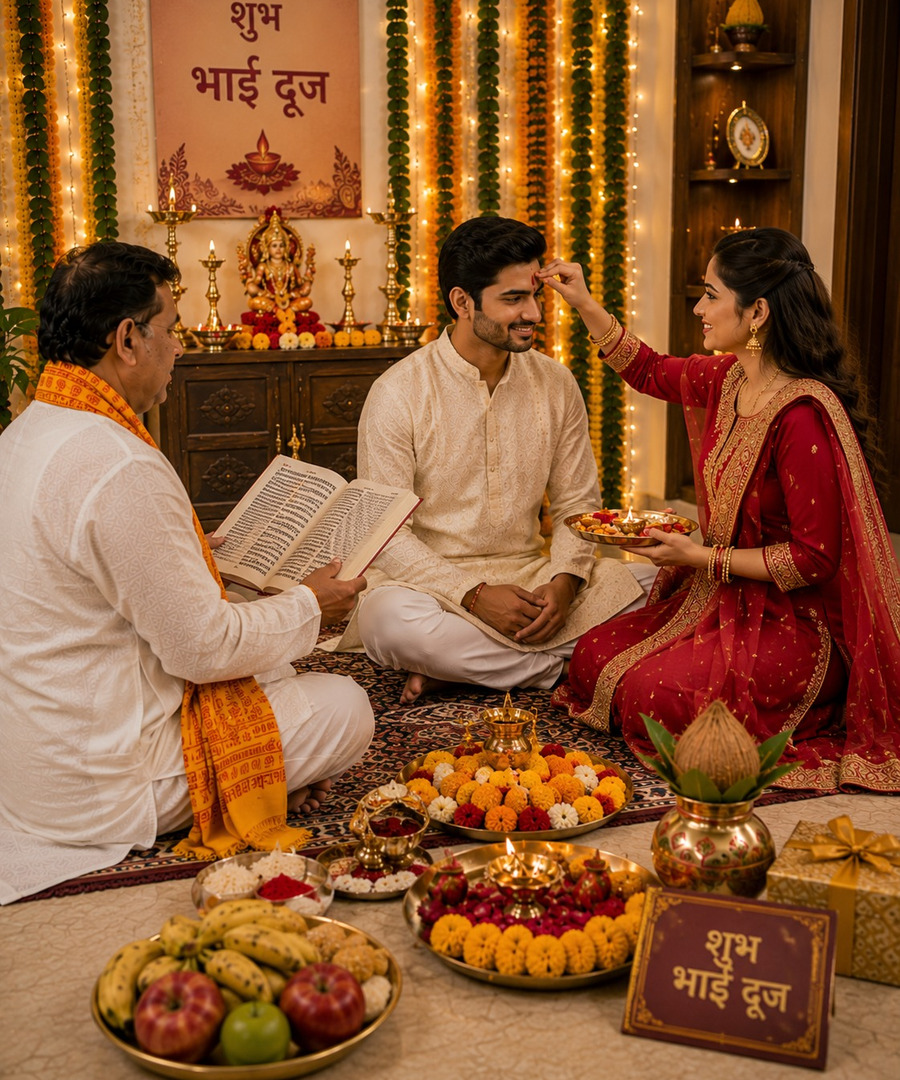
Sister Applying Tilak
भाई को तिलक लगाती बहन
Story & History of Bhai Dooj
भाई दूज की कथा एवं इतिहास
Bhai Dooj Date & Shubh Muhurat
भाई दूज की तिथि एवं शुभ मुहूर्त
- Bhai Dooj date / पर्व तिथि
- Wed, 11 November 2026 — verified
- Location / स्थान
- New Delhi, India · IST
- Dwitiya Tithi begins / द्वितीया आरंभ
- 2:00 PM, 10 Nov 2026
- Dwitiya Tithi ends / द्वितीया समाप्त
- 3:53 PM, 11 Nov 2026
- Aparahna Tika time / अपराह्न तिलक समय
- 1:10 PM – 3:20 PM (Aparahna Tika time)
- Sunrise & sunset / सूर्योदय व सूर्यास्त
- Not independently verified — confirm locally
- Month and Paksha / मास व पक्ष
- Kartik · Shukla Paksha Dwitiya
- Vikram Samvat / विक्रम संवत
- Not independently verified
The festival date is the day Bhai Dooj is observed; the Dwitiya Tithi itself starts and ends at the times shown, which span two calendar days. · पर्व तिथि वह दिन है जब भाई दूज मनाई जाती है; द्वितीया तिथि ऊपर दिए समय पर आरंभ और समाप्त होती है, जो दो दिनों में फैली है।
Exact Tithi and Puja Muhurat may vary by location and regional tradition. Please confirm with your local Panchang.
सटीक तिथि और पूजा मुहूर्त स्थान और क्षेत्रीय परंपरा के अनुसार भिन्न हो सकते हैं। कृपया अपने स्थानीय पंचांग से पुष्टि करें।
Checked on 16 October 2026: Drik Panchang · New Delhi · 2026. Other cities, countries and Nepal's Bhai Tika may differ (some observe on 10 November); this is a dated reference, not a live location service.
Why Is Bhai Dooj Celebrated?
भाई दूज क्यों मनाई जाती है?
Why Is Bhai Dooj Celebrated?
भाई दूज क्यों मनाई जाती है?
Bhai Dooj is about the relationship and its mutual affection — not only a ritual performed by one sibling for the other. Its main themes are:
भाई दूज रिश्ते और उसके परस्पर स्नेह का पर्व है — केवल एक भाई-बहन द्वारा दूसरे के लिए किया गया अनुष्ठान नहीं। इसके प्रमुख भाव हैं:
- Love and affection between brothers and sisters.भाई-बहन के बीच प्रेम और स्नेह।
- Prayers for the well-being of family members.परिवारजनों के कल्याण की प्रार्थना।
- The traditional story of Yamuna and Yama.यमुना और यम की पारंपरिक कथा।
- The symbolic meaning of tilak and prayers.तिलक और प्रार्थना का प्रतीकात्मक अर्थ।
- Gratitude for family support.पारिवारिक सहयोग के प्रति कृतज्ञता।
- Mutual respect, kindness and responsibility.परस्पर सम्मान, दया और ज़िम्मेदारी।
- Family reunions and sharing festive food.पारिवारिक मिलन और त्योहारी भोजन बाँटना।
- Strengthening relationships through time, care and thoughtful gestures.समय, देखभाल और विचारशील व्यवहार से रिश्तों को मज़बूत करना।
- No ritual is needed to prove love, and the festival promises no particular outcome — its value lies in the care it expresses.प्रेम सिद्ध करने के लिए कोई अनुष्ठान आवश्यक नहीं, और पर्व किसी विशेष फल का वचन नहीं देता — इसका मूल्य व्यक्त की गई देखभाल में है।
Bhai Dooj Puja Vidhi — Step by Step
भाई दूज पूजा विधि — चरणबद्ध जानकारी
Bhai Dooj Puja Vidhi — Step by Step
भाई दूज पूजा विधि — चरणबद्ध जानकारी
A general guide, not a compulsory sequence. Steps vary by family and region; adapt them to your tradition.
यह सामान्य मार्गदर्शन है, अनिवार्य क्रम नहीं। चरण परिवार और क्षेत्र अनुसार भिन्न होते हैं; अपनी परंपरा अनुसार अपनाएँ।
- 1
Clean and Prepare the Puja Area
पूजा स्थान तैयार करें
Choose a clean, peaceful spot, sweep it, and lay a clean cloth or low seat. A simple corner of the home is enough.
स्वच्छ और शांत स्थान चुनें, झाड़ू लगाएँ और स्वच्छ वस्त्र या आसन बिछाएँ। घर का एक साधारण कोना भी पर्याप्त है।
- 2
Arrange the Puja Thali
पूजा थाली सजाएँ
Place kumkum, akshat, flowers, a diya and sweets on a thali, plus any items your family traditionally uses.
थाली में कुमकुम, अक्षत, फूल, दीया और मिठाई रखें, साथ ही परिवार में प्रचलित अन्य वस्तुएँ।
- 3
Prepare for the Ceremony
अनुष्ठान की तैयारी
Sister and brother may bathe and wear clean or festive clothing, according to family custom.
पारिवारिक रीति अनुसार बहन और भाई स्नान कर स्वच्छ या त्योहारी वस्त्र पहन सकते हैं।
- 4
Light the Diya
दीया जलाएँ
Light the diya as a sign of auspiciousness. Keep it on a stable, heat-resistant surface away from clothing and hair.
शुभता के प्रतीक रूप में दीया जलाएँ। उसे स्थिर, ताप-रोधी सतह पर कपड़ों और बालों से दूर रखें।
- 5
Apply Tilak
तिलक लगाएँ
The sister traditionally applies tilak to her brother's forehead, often adding a few grains of rice. The material and method differ by region.
बहन परंपरागत रूप से भाई के माथे पर तिलक लगाती है, प्रायः कुछ अक्षत के साथ। सामग्री और विधि क्षेत्र अनुसार भिन्न है।
- 6
Offer Prayers
प्रार्थना करें
Pray for the brother's well-being, happiness and long life, and perform aarti if it is your family's practice.
भाई के कल्याण, सुख और दीर्घायु की प्रार्थना करें, और परिवार में प्रचलन हो तो आरती करें।
- 7
Offer Sweets or Food
मिठाई या भोजन कराएँ
Share sweets, snacks or a meal together.
मिठाई, नाश्ता या भोजन साथ में बाँटें।
- 8
Exchange Gifts and Blessings
उपहार और आशीर्वाद
Siblings may exchange gifts, blessings or thoughtful gestures according to their preferences and means — expensive gifts are never required.
भाई-बहन अपनी पसंद और सामर्थ्य अनुसार उपहार, आशीर्वाद या स्नेहपूर्ण भाव का आदान-प्रदान कर सकते हैं — महँगे उपहार कभी आवश्यक नहीं।
- 9
Spend Time Together
साथ समय बिताएँ
Celebrate through conversation, a shared meal, gratitude and mutual support.
बातचीत, साथ भोजन, कृतज्ञता और परस्पर सहयोग से उत्सव मनाएँ।
Bhai Dooj Tilak Ceremony
भाई दूज का तिलक समारोह
Bhai Dooj Tilak Ceremony
भाई दूज का तिलक समारोह
In many homes the brother sits facing the sister, who applies tilak — commonly kumkum or roli with a few grains of rice — to his forehead, performs aarti with a diya, offers flowers and sweets, and prays for his well-being. The tilak marks blessing and respect; the prayers express the sister's love and hopes for her brother.
अनेक घरों में भाई बहन के सामने बैठता है और बहन उसके माथे पर तिलक — प्रायः कुमकुम या रोली के साथ कुछ अक्षत — लगाती है, दीपक से आरती करती है, फूल और मिठाई अर्पित करती है और उसके कल्याण की प्रार्थना करती है। तिलक आशीर्वाद और सम्मान का चिह्न है; प्रार्थनाएँ बहन का स्नेह और शुभकामनाएँ प्रकट करती हैं।
Families adapt the ceremony freely: some include a coconut or sacred thread, some perform it at a fixed muhurat, some combine it with a meal, and siblings without a brother or sister often celebrate with cousins or close friends. No single procedure is compulsory. Simple preparation checklist:
परिवार इस अनुष्ठान को अपनी रीति अनुसार ढालते हैं: कुछ नारियल या कलावा शामिल करते हैं, कुछ निश्चित मुहूर्त में करते हैं, कुछ भोजन के साथ जोड़ते हैं, और भाई या बहन न होने पर लोग प्रायः चचेरे भाई-बहनों या निकट मित्रों के साथ मनाते हैं। कोई एक विधि अनिवार्य नहीं। सरल तैयारी सूची:
- A clean thali with a small bowl of kumkum or skin-safe tilak pasteस्वच्छ थाली और कुमकुम या त्वचा के लिए सुरक्षित तिलक की छोटी कटोरी
- A few grains of akshat (whole rice)थोड़े अक्षत (साबुत चावल)
- A diya placed safely on a stable surfaceस्थिर सतह पर सुरक्षित रखा दीया
- Flowers and a sweetफूल और मिठाई
- A clean seat or low stool for the brotherभाई के लिए स्वच्छ आसन या चौकी
- A little water and a napkinथोड़ा जल और रूमाल
Bhai Dooj Across Different Regions
विभिन्न क्षेत्रों में भाई दूज की परंपराएँ
Bhai Dooj Across Different Regions
विभिन्न क्षेत्रों में भाई दूज की परंपराएँ
Dates, ritual details, food customs and terminology vary. Not every region uses the same tilak, thali or ceremonial steps.
तिथि, विधि, भोजन की रीतियाँ और नाम भिन्न होते हैं। हर क्षेत्र में एक जैसा तिलक, थाली या विधि नहीं होती।
- Bhai Dooj — commonly observed in many North Indian communities, often with tilak, aarti and a family meal.भाई दूज — उत्तर भारत के अनेक समुदायों में प्रचलित, प्रायः तिलक, आरती और पारिवारिक भोजन के साथ।
- Bhau Beej or Bhau Bij — observed in Maharashtra and parts of western India; family customs may include aarti, tilak and a meal prepared for the brother.भाऊ बीज — महाराष्ट्र और पश्चिम भारत के कुछ भागों में; पारिवारिक रीतियों में आरती, तिलक और भाई के लिए बना भोजन शामिल हो सकता है।
- Bhai Tika — celebrated in Nepal as the final day of Tihar, with its own distinctive multicoloured tika, garlands and ceremonial practices. Its date can differ from Indian calendars.भाई टीका — नेपाल में तिहार के अंतिम दिन, अपने विशिष्ट बहुरंगी टीके, मालाओं और विधियों के साथ। इसकी तिथि भारतीय पंचांगों से भिन्न हो सकती है।
- Yama Dwitiya — a traditional name linking the festival with Yama and the Dwitiya Tithi.यम द्वितीया — पर्व को यम और द्वितीया तिथि से जोड़ने वाला पारंपरिक नाम।
Bhai Dooj Puja Samagri
भाई दूज पूजा सामग्री
Bhai Dooj Puja Samagri
भाई दूज पूजा सामग्री
Items marked optional or 'according to family tradition' are not compulsory. A simple thali is enough.
'वैकल्पिक' या 'पारिवारिक परंपरा अनुसार' चिह्नित वस्तुएँ अनिवार्य नहीं हैं। साधारण थाली पर्याप्त है।
0 of 15 items prepared15 में से 0 सामग्री तैयार
Items depend on family, region and the chosen puja; optional items are not universal requirements. · सामग्री परिवार, क्षेत्र और चुनी हुई पूजा अनुसार बदलती है।
Important Bhai Dooj Guidelines
भाई दूज के लिए आवश्यक सावधानियाँ
Important Bhai Dooj Guidelines
भाई दूज के लिए आवश्यक सावधानियाँ
- Confirm the local Panchang if your family follows a specific Muhurat.यदि परिवार विशेष मुहूर्त मानता है तो स्थानीय पंचांग से पुष्टि करें।
- Keep diyas on stable, heat-resistant surfaces.दीयों को स्थिर, ताप-रोधी सतह पर रखें।
- Never leave burning lamps unattended.जलते दीपक को कभी अकेला न छोड़ें।
- Keep flames away from children, pets, curtains and flammable decorations.लौ को बच्चों, पालतू जानवरों, पर्दों और ज्वलनशील सजावट से दूर रखें।
- Use skin-safe tilak materials and avoid ingredients that may cause irritation or allergies.त्वचा के लिए सुरक्षित तिलक सामग्री प्रयोग करें और जलन या एलर्जी करने वाली चीज़ों से बचें।
- Avoid applying powders or liquids near the eyes.आँखों के पास पाउडर या तरल न लगाएँ।
- Maintain cleanliness while preparing food and prasad.भोजन और प्रसाद बनाते समय स्वच्छता रखें।
- Respect family, regional and personal traditions.पारिवारिक, क्षेत्रीय और व्यक्तिगत परंपराओं का सम्मान करें।
- Do not pressure siblings to exchange expensive gifts.भाई-बहनों पर महँगे उपहार देने का दबाव न डालें।
- Avoid fear-based claims about missing a ritual or performing it at the wrong time.अनुष्ठान छूटने या गलत समय पर करने के बारे में भय पैदा करने वाली बातों से बचें।
- Celebrate with affection, respect and mutual well-being.स्नेह, सम्मान और परस्पर कल्याण के भाव से उत्सव मनाएँ।
Traditional Bhai Dooj Food and Sweets
भाई दूज के पारंपरिक पकवान एवं मिठाइयाँ
Traditional Bhai Dooj Food and Sweets
भाई दूज के पारंपरिक पकवान एवं मिठाइयाँ
Sharing food is at the heart of Bhai Dooj — echoing Yamuna feeding Yama, many sisters prepare a meal or sweets for a visiting brother, and siblings often eat together. Examples, depending on region, family and dietary needs — no dish is mandatory:
भोजन बाँटना भाई दूज का केंद्र है — यमुना द्वारा यम को भोजन कराने की स्मृति में अनेक बहनें आने वाले भाई के लिए भोजन या मिठाई बनाती हैं और भाई-बहन प्रायः साथ भोजन करते हैं। क्षेत्र, परिवार और आहार आवश्यकता अनुसार उदाहरण — कोई व्यंजन अनिवार्य नहीं:
- Laddooलड्डू
- Barfiबर्फी
- Kheerखीर
- Homemade sweetsघर की बनी मिठाइयाँ
- Seasonal snacksमौसमी नाश्ते
- Regional festive dishesक्षेत्रीय त्योहारी व्यंजन
- A meal prepared for a visiting siblingआने वाले भाई या बहन के लिए बना भोजन
- Food hygiene: wash hands and utensils, keep food covered, store milk sweets cool, and respect allergies and dietary choices.खाद्य स्वच्छता: हाथ और बर्तन धोएँ, भोजन ढककर रखें, दूध की मिठाइयाँ ठंडी जगह रखें और एलर्जी व आहार पसंद का सम्मान करें।
Bhai Dooj Mantras and Prayers
भाई दूज के मंत्र एवं प्रार्थनाएँ
Bhai Dooj Mantras and Prayers
भाई दूज के मंत्र एवं प्रार्थनाएँ
We could not verify the exact wording and scriptural source of a Sanskrit mantra specific to Bhai Dooj, so none is shown. Families may recite the verses of their own tradition. Below is a simple prayer, clearly marked as newly written; no prayer is compulsory.
भाई दूज के किसी विशिष्ट संस्कृत मंत्र के सटीक शब्द और शास्त्रीय स्रोत हम सत्यापित नहीं कर सके, इसलिए कोई मंत्र नहीं दिया गया। परिवार अपनी परंपरा के श्लोक पढ़ सकते हैं। नीचे एक सरल प्रार्थना है, जिसे स्पष्ट रूप से नई रचना बताया गया है; कोई प्रार्थना अनिवार्य नहीं।
Simple Hindi prayer for siblings
Newly written devotional prayer · not a scriptural or Vedic mantra
हे प्रभु, मेरे भाई-बहन को सदा स्वस्थ, सुखी और सुरक्षित रखना। हमारे बीच प्रेम, सम्मान और समझ बनी रहे, और हम हर परिस्थिति में एक-दूसरे का सहारा बनें।
O Lord, keep my brother or sister always healthy, happy and safe. May love, respect and understanding remain between us, and may we support each other in every circumstance.
यह प्रार्थना भाई-बहन के स्नेह और कल्याण की कामना के लिए सरल हिंदी में लिखी गई है।
The Meaning and Values of Bhai Dooj
भाई दूज का भावनात्मक एवं आध्यात्मिक महत्व
The Meaning and Values of Bhai Dooj
भाई दूज का भावनात्मक एवं आध्यात्मिक महत्व
These are cultural, spiritual and personal values the festival invites — not guaranteed supernatural outcomes.
ये पर्व द्वारा प्रेरित सांस्कृतिक, आध्यात्मिक और व्यक्तिगत मूल्य हैं — अलौकिक परिणामों की गारंटी नहीं।
- Love and mutual respect between siblings.भाई-बहन के बीच प्रेम और परस्पर सम्मान।
- Gratitude for family support.पारिवारिक सहयोग के प्रति कृतज्ञता।
- Praying for the well-being of loved ones.प्रियजनों के कल्याण की प्रार्थना।
- Forgiveness and understanding.क्षमा और समझ।
- Strengthening relationships through communication.संवाद से रिश्तों को मज़बूत करना।
- Sharing food and spending meaningful time together.भोजन बाँटना और साथ में सार्थक समय बिताना।
- Respecting each sibling's individuality and circumstances.हर भाई-बहन के व्यक्तित्व और परिस्थिति का सम्मान।
- Offering support without expecting expensive gifts or rewards.महँगे उपहार या प्रतिफल की अपेक्षा के बिना सहयोग देना।
Bhai Dooj Guidance for All 12 Rashis
भाई दूज पर सभी 12 राशियों के लिए मार्गदर्शन
Bhai Dooj Guidance for All 12 Rashis
भाई दूज पर सभी 12 राशियों के लिए मार्गदर्शन
General spiritual reflections inspired by traditional zodiac symbolism — not personalised predictions. Your Rashi does not determine the quality of your family relationships.
पारंपरिक राशि प्रतीकों से प्रेरित सामान्य आध्यात्मिक चिंतन — व्यक्तिगत भविष्यवाणी नहीं। आपकी राशि आपके पारिवारिक रिश्तों की गुणवत्ता तय नहीं करती।
01
Mesh · मेष
Gentle initiative · कोमल पहल
Be the first to call or visit a sibling you have not spoken with in a while — a small first step can warm a relationship.
उस भाई या बहन को सबसे पहले फ़ोन करें या मिलें जिससे कुछ समय से बात नहीं हुई — छोटी पहल रिश्ते में गर्माहट ला सकती है।
02
Vrishabh · वृषभ
Comfort through food · भोजन से अपनापन
Prepare or share a dish your sibling loved in childhood, letting a familiar taste carry your affection.
बचपन में भाई-बहन को प्रिय कोई व्यंजन बनाएँ या बाँटें, ताकि परिचित स्वाद आपका स्नेह पहुँचाए।
03
Mithun · मिथुन
Honest conversation · सच्चा संवाद
Ask your sibling one genuine question about their life today and listen without rushing to advise.
आज भाई या बहन से उनके जीवन के बारे में एक सच्चा प्रश्न पूछें और सलाह देने की जल्दी किए बिना सुनें।
04
Kark · कर्क
Nurturing memory · स्नेहिल स्मृतियाँ
Share a happy family memory or old photograph, and thank your sibling for the part they played in it.
कोई सुखद पारिवारिक स्मृति या पुरानी तस्वीर साझा करें और उसमें उनकी भूमिका के लिए धन्यवाद दें।
05
Singh · सिंह
Generous recognition · उदार सराहना
Celebrate a sibling's achievement warmly, letting them have the spotlight today.
भाई या बहन की किसी उपलब्धि को खुले मन से सराहें और आज उन्हें केंद्र में रहने दें।
06
Kanya · कन्या
Thoughtful help · विचारशील सहायता
Offer one practical form of help your sibling would appreciate, quietly and without keeping score.
भाई या बहन को कोई व्यावहारिक सहायता दें जिसकी वे सराहना करें — चुपचाप, बिना हिसाब रखे।
07
Tula · तुला
Restoring balance · संतुलन की वापसी
If there is an old disagreement, choose fairness and a kind word over needing to be right.
यदि कोई पुराना मतभेद है, तो सही साबित होने के बजाय निष्पक्षता और मीठे शब्द चुनें।
08
Vrishchik · वृश्चिक
Deep trust · गहरा विश्वास
Let go of one lingering hurt in prayer, and remember the loyalty your sibling has shown over the years.
प्रार्थना में एक पुरानी चोट छोड़ दें और वर्षों में भाई या बहन द्वारा दिखाई निष्ठा को याद करें।
09
Dhanu · धनु
Shared adventure · साझा आनंद
Plan a simple outing or activity to enjoy together soon — joy shared builds lasting bonds.
जल्द साथ में कोई सरल सैर या गतिविधि की योजना बनाएँ — बाँटा गया आनंद स्थायी बंधन बनाता है।
10
Makar · मकर
Steady responsibility · स्थिर ज़िम्मेदारी
Reflect on how you and your sibling can share family responsibilities fairly and support each other's burdens.
विचार करें कि आप और भाई-बहन पारिवारिक ज़िम्मेदारियाँ कैसे बराबरी से बाँटें और एक-दूसरे का बोझ हल्का करें।
11
Kumbh · कुंभ
Wider family circle · विस्तृत परिवार
Include cousins, chosen siblings or someone celebrating alone — kinship can be wider than birth.
चचेरे भाई-बहनों, मुँहबोले भाई-बहनों या अकेले त्योहार मना रहे किसी व्यक्ति को शामिल करें — अपनापन जन्म से कहीं व्यापक हो सकता है।
12
Meen · मीन
Heartfelt blessing · हार्दिक आशीर्वाद
Write a short message or prayer wishing your sibling peace and happiness, and send it even if you are far apart.
भाई या बहन के सुख-शांति की कामना करते हुए छोटा संदेश या प्रार्थना लिखें और दूर हों तब भी भेजें।
Frequently Asked Questions About Bhai Dooj
भाई दूज से जुड़े अक्सर पूछे जाने वाले प्रश्न
Frequently Asked Questions About Bhai Dooj
भाई दूज से जुड़े अक्सर पूछे जाने वाले प्रश्न
- What is Bhai Dooj?भाई दूज क्या है?
A Hindu festival celebrating the bond between brothers and sisters, usually observed at the end of the Diwali festivities with tilak, prayers, food and gifts.
भाई-बहन के बंधन का हिंदू पर्व, जो प्रायः दीपावली उत्सव के अंत में तिलक, प्रार्थना, भोजन और उपहारों के साथ मनाया जाता है।
- Why is Bhai Dooj celebrated?भाई दूज क्यों मनाई जाती है?
To express mutual affection, pray for siblings' well-being and strengthen family bonds, inspired by the traditional story of Yamuna and Yama.
परस्पर स्नेह प्रकट करने, भाई-बहन के कल्याण की प्रार्थना करने और पारिवारिक बंधन मज़बूत करने के लिए, यमुना और यम की पारंपरिक कथा से प्रेरित।
- What is the story of Yamuna and Yama?यमुना और यम की कथा क्या है?
In a widely told account, Yamuna welcomed her brother Yama, applied tilak and fed him; pleased, Yama blessed her. Retellings differ in detail.
प्रचलित कथा में यमुना ने भाई यम का स्वागत किया, तिलक लगाया और भोजन कराया; प्रसन्न होकर यम ने आशीर्वाद दिया। कथनों में विवरण भिन्न हैं।
- Why is Bhai Dooj also called Yama Dwitiya?इसे यम द्वितीया क्यों कहते हैं?
Because it is linked with Yama's story and observed on the Dwitiya (second) Tithi of Kartik Shukla Paksha.
क्योंकि यह यम की कथा से जुड़ा है और कार्तिक शुक्ल पक्ष की द्वितीया तिथि को मनाया जाता है।
- When is Bhai Dooj celebrated?भाई दूज कब मनाई जाती है?
On Kartik Shukla Dwitiya, usually two days after Diwali. In 2026 it falls on Wednesday, 11 November for New Delhi; some locations and Nepal's Bhai Tika may differ.
कार्तिक शुक्ल द्वितीया को, प्रायः दीपावली के दो दिन बाद। 2026 में नई दिल्ली के लिए बुधवार, 11 नवंबर; कुछ स्थानों और नेपाल के भाई टीका की तिथि भिन्न हो सकती है।
- How is the correct Bhai Dooj date determined?सही तिथि कैसे तय होती है?
By the local Panchang — based on when Dwitiya Tithi prevails at your location, especially in the afternoon (Aparahna) in many North Indian traditions. Confirm with your local Panchang or priest.
स्थानीय पंचांग से — आपके स्थान पर द्वितीया तिथि कब है, विशेषकर उत्तर भारत की अनेक परंपराओं में अपराह्न काल में। स्थानीय पंचांग या पंडित जी से पुष्टि करें।
- What is the significance of applying tilak?तिलक लगाने का क्या महत्व है?
It is a gesture of blessing, respect and prayer for the brother's well-being, echoing Yamuna's welcome of Yama.
यह आशीर्वाद, सम्मान और भाई के कल्याण की प्रार्थना का भाव है, जो यमुना द्वारा यम के स्वागत की स्मृति है।
- What items are needed for Bhai Dooj puja?पूजा के लिए क्या सामग्री चाहिए?
Commonly a thali, kumkum, akshat, diya, flowers and sweets; fruits, aarti items, food and gifts are optional. See the checklist above.
प्रायः थाली, कुमकुम, अक्षत, दीया, फूल और मिठाई; फल, आरती सामग्री, भोजन और उपहार वैकल्पिक हैं। ऊपर की सूची देखें।
- How is the Bhai Dooj tilak ceremony performed?तिलक समारोह कैसे किया जाता है?
Commonly the sister applies tilak with rice, performs aarti, offers sweets and prays for her brother; the brother offers blessings or a gift. Families vary.
प्रायः बहन अक्षत सहित तिलक लगाती है, आरती करती है, मिठाई खिलाती है और भाई के लिए प्रार्थना करती है; भाई आशीर्वाद या उपहार देता है। परिवारों में भिन्नता है।
- What should be included in a Bhai Dooj puja thali?थाली में क्या रखें?
Kumkum or tilak paste, akshat, a diya, flowers and a sweet are common. Add items your family traditionally uses.
कुमकुम या तिलक, अक्षत, दीया, फूल और मिठाई सामान्य हैं। परिवार में प्रचलित अन्य वस्तुएँ जोड़ें।
- Is Bhai Dooj the same as Bhau Beej?क्या भाई दूज और भाऊ बीज एक ही हैं?
They celebrate the same sibling bond on the same Tithi; Bhau Beej is the name used in Maharashtra and parts of western India, with its own customs.
दोनों एक ही तिथि पर भाई-बहन के बंधन का उत्सव हैं; भाऊ बीज महाराष्ट्र और पश्चिम भारत के कुछ भागों का नाम है, जिसकी अपनी रीतियाँ हैं।
- What is the difference between Bhai Dooj and Bhai Tika?भाई दूज और भाई टीका में क्या अंतर है?
Bhai Tika is Nepal's observance on the last day of Tihar, with a distinctive multicoloured tika and garlands; its date and rituals can differ from Indian Bhai Dooj.
भाई टीका नेपाल में तिहार के अंतिम दिन विशिष्ट बहुरंगी टीके और मालाओं के साथ मनाया जाता है; इसकी तिथि और विधि भारतीय भाई दूज से भिन्न हो सकती है।
- Can Bhai Dooj be celebrated with a simple ceremony at home?क्या घर पर सरल रूप से मना सकते हैं?
Yes. A tilak, a short prayer and a shared sweet or meal are enough; a priest can guide if you prefer.
हाँ। तिलक, छोटी प्रार्थना और साथ में मिठाई या भोजन पर्याप्त है; चाहें तो पंडित जी मार्गदर्शन कर सकते हैं।
- Is a specific Muhurat necessary for every family?क्या हर परिवार के लिए विशेष मुहूर्त आवश्यक है?
No. Many families follow the Aparahna time, others celebrate whenever siblings meet. Follow your family tradition without fear.
नहीं। अनेक परिवार अपराह्न काल मानते हैं, अन्य जब भाई-बहन मिलें तब मनाते हैं। बिना भय के अपनी पारिवारिक परंपरा अपनाएँ।
- What food is traditionally prepared for Bhai Dooj?कौन-सा भोजन बनाया जाता है?
Sweets like laddoo, barfi or kheer and a festive meal are common, but menus vary by region, family and dietary needs.
लड्डू, बर्फी या खीर जैसी मिठाइयाँ और त्योहारी भोजन सामान्य हैं, पर व्यंजन क्षेत्र, परिवार और आहार आवश्यकता अनुसार बदलते हैं।
- How can siblings celebrate Bhai Dooj when they live far apart?दूर रहने पर कैसे मनाएँ?
Through a video call, a heartfelt message, sending sweets or a small gift, and praying for each other — the affection matters more than the distance.
वीडियो कॉल, हार्दिक संदेश, मिठाई या छोटा उपहार भेजकर और एक-दूसरे के लिए प्रार्थना करके — दूरी से अधिक स्नेह महत्वपूर्ण है।
Explore Related Festivals
संबंधित पर्व
Sources & Traditional References
स्रोत एवं पारंपरिक संदर्भ
- Drik Panchang · 2026 Bhai Dooj date and Tika time for New Delhi
- Drik Panchang · 2026 Bhai Tika (Tihar) for reference on Nepali observance
- Encyclopaedia Britannica · Diwali and its five-day sequence
- Wikipedia · Bhai Dooj (overview of regional names and customs)
The Yamuna–Yama story is paraphrased as sacred tradition, not a historical claim; customs vary by region and community. Local sunrise and sunset are not independently verified. · यमुना-यम कथा पवित्र परंपरा के रूप में सरल शब्दों में दी गई है, ऐतिहासिक दावे के रूप में नहीं; रीति-रिवाज क्षेत्र और समुदाय अनुसार भिन्न हैं।
Celebrate Bhai Dooj with Love
स्नेह के साथ मनाएँ भाई दूज
Honour the bond between siblings with a simple tilak, a heartfelt prayer and a shared meal. Explore puja assistance and samagri according to your family's customs.